Why Barre Leaves You Sore in Muscles You Didn't Know You Used
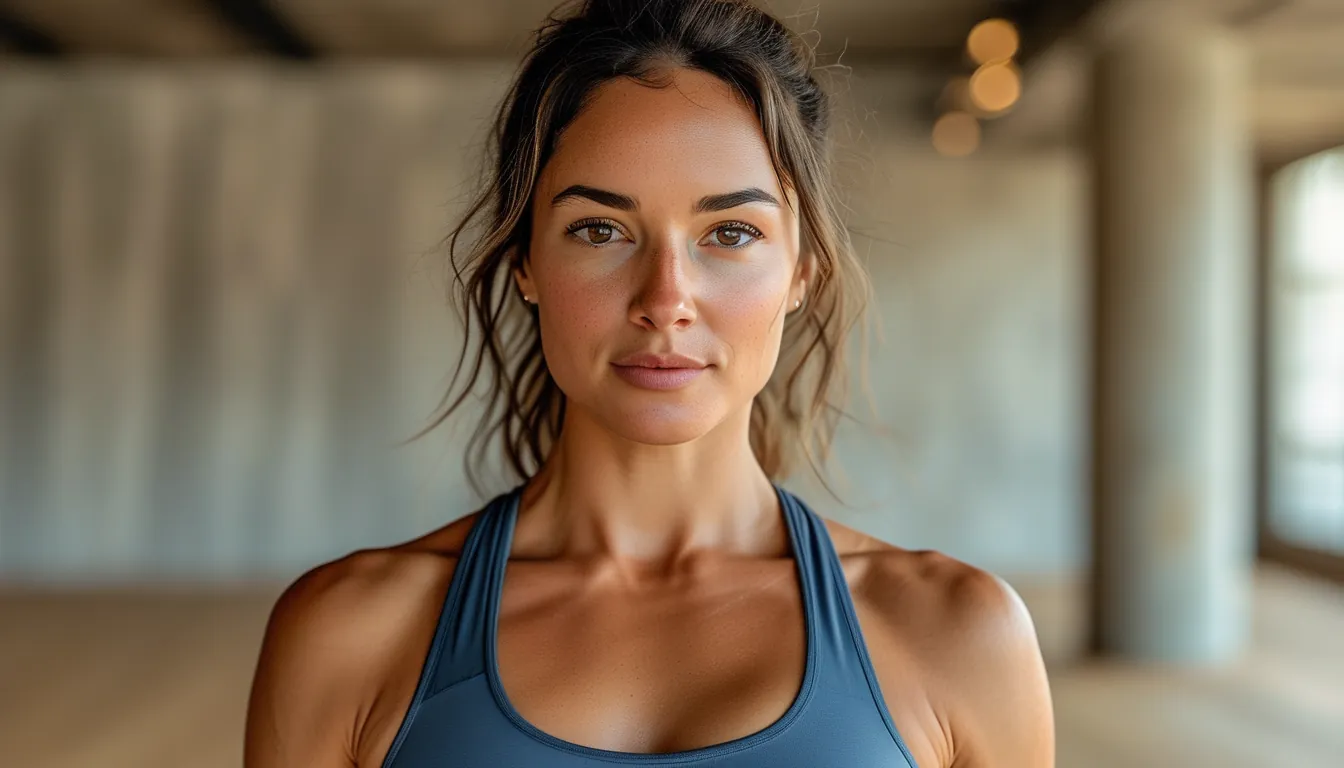
Quick Answer: Barre’s tiny held positions load the small stabilizers around a joint — outer hip rotators, adductors, postural muscles near the shoulder blades — that squats and lunges mostly bypass. The odd soreness map is the class working as designed, and it usually fades within two or three sessions.
Day two after your first barre class, and the sore spots make no anatomical sense. The outer edge of your hip. Somewhere under your arm. A patch beside your shoulder blade you’ve never thought about once.
Your quads, meanwhile, are completely unbothered.
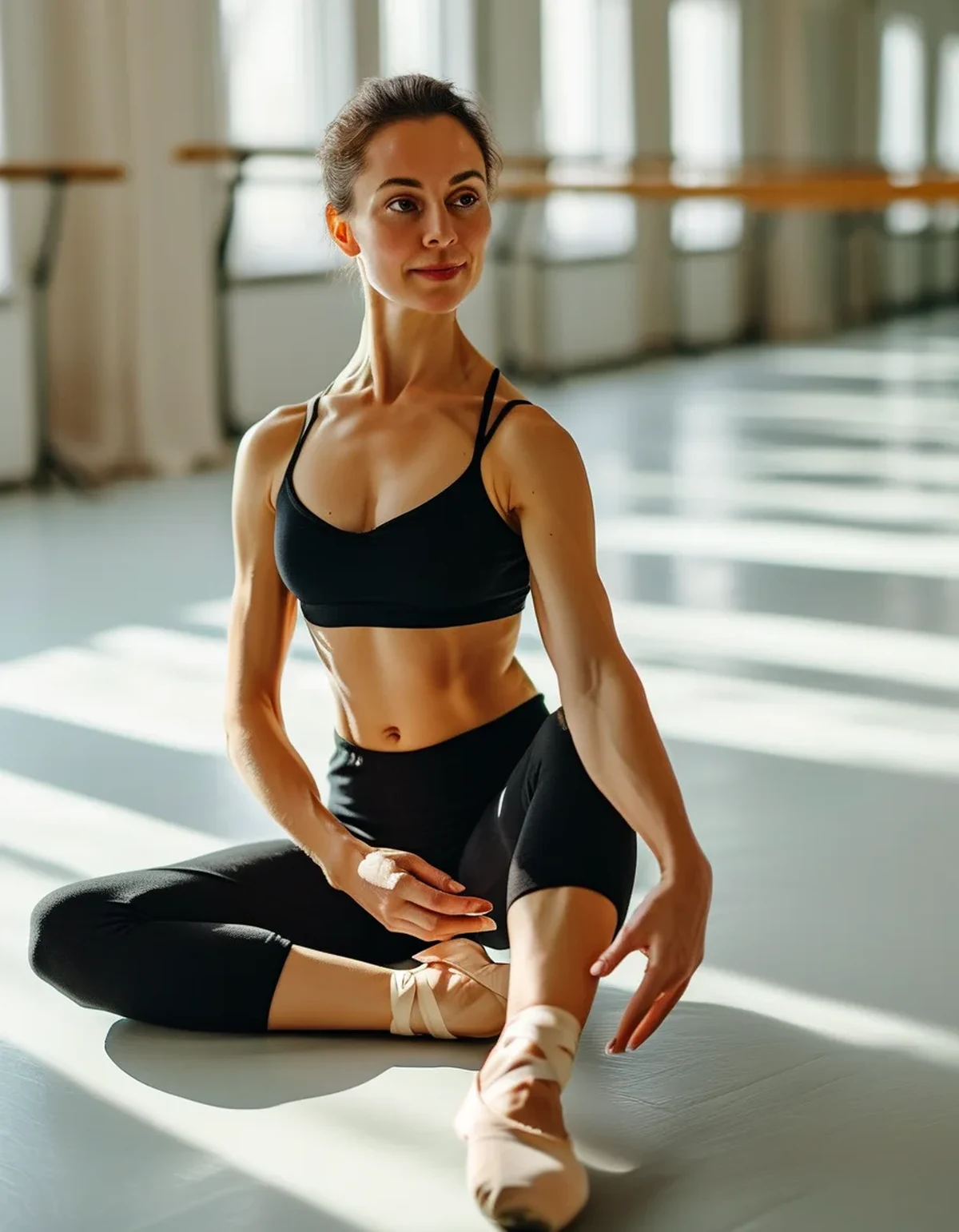
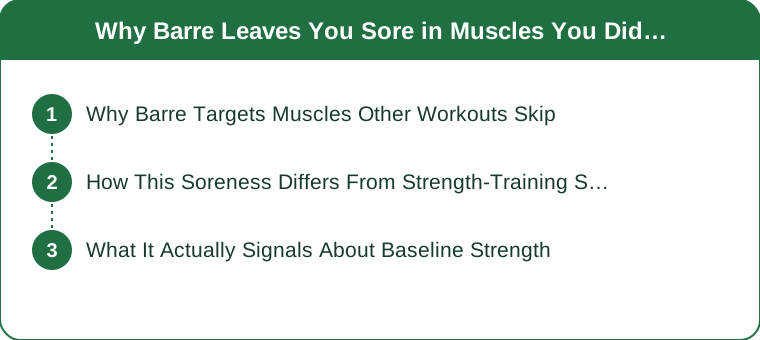
Why does barre reach muscles other workouts skip?
Tiny holds load stabilizers, not prime movers. Barre’s signature held positions work the small muscles that stabilize a joint rather than the large movers doing most of the work in a squat.
Micro-range isolates. A few inches of movement rather than a full squat isolates muscles that only ever get partial engagement in bigger patterns — the same logic behind the barre core series.
Nothing fully relaxes. Unlike a lift with a clear top and bottom, barre sequences rarely let a muscle release between reps, keeping small stabilizers under sustained low-level load for minutes at a time.
Turnout is the whole trick. Turned-out stances and small pulses isolate the outer hip rotators and inner-thigh adductors that squats and lunges largely bypass.
Posture is a full-class demand. The upright held position keeps small postural muscles along the spine and shoulder blades active for the entire hour — not just during specific exercises.
How is this different from strength-training soreness?
- It’s more diffuse. The whole outer hip rather than one clear muscle belly, because multiple small stabilizers were working together.
- It adapts fast. Small isometric muscles respond quickly to new demand, so the same movements often feel noticeably easier within two or three classes.
- It can linger a day longer. Some people report barre soreness outlasting a comparable strength session, possibly related to sustained rather than on-off tension.
- Different ≠ harder. Novel soreness locations get misread as evidence of a more intense workout, when they actually reflect different muscles being reached.
- It fades on schedule. The specific unusual soreness typically settles within two or three sessions, like any new movement pattern.
Myth vs Fact
Myth: If barre makes you this sore, it must be harder than lifting. Fact: Soreness maps which muscles were reached, not how much total work was done. A heavy deadlift session does far more mechanical work and might leave you less sore.
Myth: The shaking means you’re building muscle fast. Fact: The shake is a neuromuscular fatigue response under sustained isometric tension. It’s a normal signal, not a progress meter — and it decreases as you adapt.
Myth: Barre only works small muscles, so it can’t build real strength. Fact: Stabilizer strength is real strength, and it’s the kind most gym routines under-train. It just doesn’t show up on a barbell.
Myth: You should be sore after every class. Fact: Soreness fades as stabilizers adapt, and that’s the desired outcome. Chasing soreness in a discipline built on high-rep isometrics is a good way to overdo it.
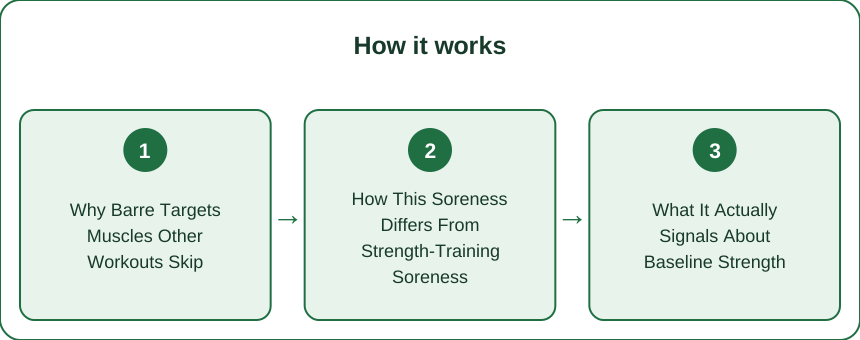
What does the soreness map tell you about your training?
It reveals a real gap. Outer hip or postural soreness after a first class often means a regular gym routine has been skipping those stabilizers entirely. That’s genuinely useful information.
It’s not a criticism of your other training. A runner or lifter feeling this simply reflects that different disciplines load different muscles. Nothing was wrong with the previous plan.
The gap is worth closing. Stabilizer strength ties directly to joint control and injury prevention — which is the reason to keep going once the novelty soreness settles.
Fast fading is a good sign. A sharp reduction across two or three classes means those stabilizers are adapting well. That’s progress, not a plateau.
Know the line. Dull and diffuse is normal. Sharp, joint-specific, or soreness that doesn’t fade within a few days warrants a step back and a form check.
Worth flagging specifically: knee pain during turned-out work usually points to a turnout coming from the knee rather than the hip, and wrist pain in plank-based sequences is a setup issue. Neither is soreness. If pain is sharp, sits in a joint, or persists beyond a few days, see a physician or physical therapist rather than training through it — and tell your instructor before the next class so they can watch your positioning.
FAQ
How long does barre soreness last?
Typically two to four days for a first class, shortening substantially by the second or third session as the stabilizers adapt. If the same soreness is still arriving identically after six or seven classes, something in the positioning is probably worth checking.
Should I go back to barre while still sore?
Generally yes, if it’s the dull, diffuse kind — those muscles adapt through repeated exposure and light activity tends to ease the stiffness. Sharp or joint-centred pain is the version to sit out.
Why don’t I feel it in my quads like a squat?
Because barre isn’t really loading them. The micro-range and turned-out positions deliberately shift work to the smaller stabilizers, which is precisely why the soreness map looks so unfamiliar.
TL;DR:
- Barre’s held positions and micro-range movements load small stabilizers, not prime movers.
- Turnout and pulses specifically reach outer hip rotators and adductors that squats bypass.
- The soreness is more diffuse than strength-training soreness and can linger slightly longer.
- It fades within two or three sessions as stabilizers adapt — that’s the goal, not a loss.
- Unusual soreness maps which muscles were reached, not how hard the class was.
- Sharp, joint-specific, or persistent pain — especially knee pain in turnout — means a form check and a professional, not another class.
See It in Motion
Seen here: UPF 50+ Short Sleeve Rashguard Swim Shirt — shop it on bubblelime.com
Keep Reading
This article is for general informational and styling purposes only. Fit, sizing, and product availability may vary.