The Barre Core Series: C-Curve, Curl and the Abs Under the Elegance

Quick Answer: The C-curve is barre’s core position: pelvis tucked, low back rounded, ribs knitted — as if curling around a beach ball. It burns because, unlike a sit-up, it never lets the abs rest at the top or bottom. Holding a clean C-curve is the exercise; if your hip flexors are screaming instead of your abs, the curve has collapsed.
From the doorway it looks like the easy part of class. Everyone’s sitting down.
Then you hold the shape for thirty seconds while your arms do something small and pointless-looking, and your abs start filing a complaint.
Here’s what’s actually happening in barre’s core chapter — and how to stop your hip flexors from stealing it.

What is the C-curve in barre?
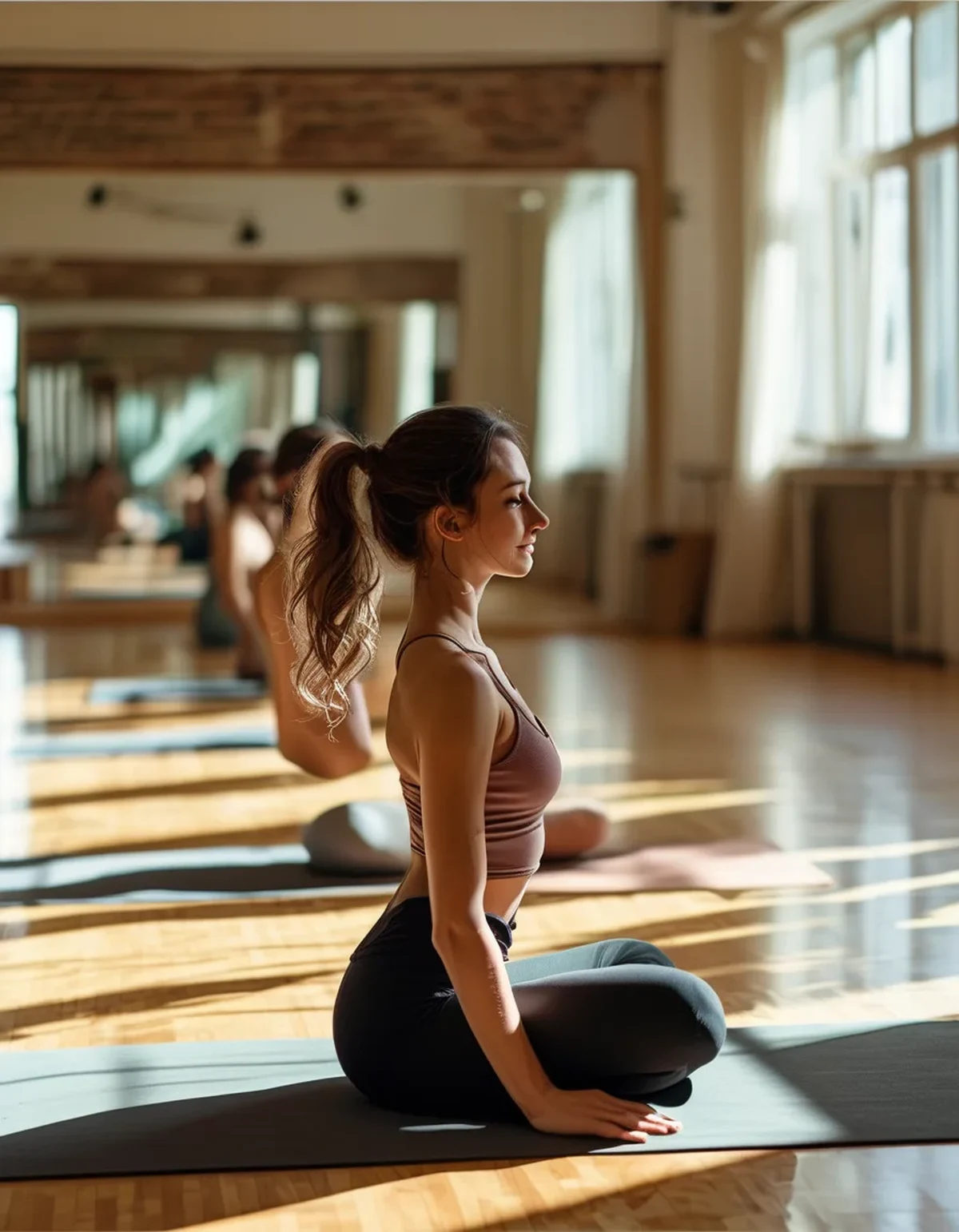
Seated or reclined, the spine curves into a C: pelvis tucked under, low back rounding toward the mat, ribs knitted down. Imagine curling around a beach ball and you’ve got it.
Two things make it work.
The abs never unload. A flat-back sit-up gives you a rest at the top and another at the bottom. The C-curve gives you nothing — it’s the same time-under-tension principle as seat work, applied to the middle.
The position is the exercise. Before any arm or leg moves, holding a clean C-curve is already core work. Instructors build everything on this shape because it’s what keeps the load in the abdominals and out of the hip flexors and neck. Lose the curve and you’re not doing an easier version of the exercise — you’re doing a different exercise, on different muscles.
What’s in the core series?
- Hold and breathe. Establish the curve and stay. Considerably harder than it looks by second thirty.
- Arm reaches and pulses. The curve holds while the arms row and press. Every reach tempts the spine to straighten — resisting that is the actual rep.
- Single-leg extensions. The curve holds while legs alternate. This is where coordination becomes the limiting factor before strength does.
- Curl-downs. Lowering one vertebra at a time toward the mat, then curling back. Barre’s version of the roll-down, performed with the brakes fully on.
- Flat-back finale. Extended-position holds that balance out all the flexion. Don’t skip these; they’re the reason the programming is more balanced than barre’s reputation suggests.
5 Mistakes Everyone Makes in the Core Series
- Straining the neck. Your head is heavy — roughly 5kg of it. Keep your gaze toward your knees and let the curve come from the middle, not the chin. Cradling your head in your hands is allowed and always was.
- Letting the hip flexors take over. Thighs burning instead of abs means the curve has flattened. Re-scoop, shrink the range, resume. This is the single most common fault in the room.
- Holding your breath. The C-curve compresses your middle, so breathing needs deliberate scheduling. Exhale on the effort and the set lengthens noticeably.
- Chasing range. A smaller movement with an honest curve beats a bigger one without. The recurring barre theme, applied to the middle — and the fix that most reliably surprises people.
- Anchoring the feet under something. Hooking your feet lets the hip flexors do the work your abs came for. If you need an anchor, the range is too big.
Does the C-curve actually build core strength?
Yes — it’s flexion-endurance training, and honest about it.
You’re accumulating long time-under-tension for the rectus abdominis and obliques. That’s the same currency planks trade in, just from a different posture. Neither is superior; they load the same system through different positions, which is why doing both works better than arguing about them.
The transfer to daily life is real, too. The scoop control shows up in posture, in Pilates crossover work, and in the unglamorous economy of getting up off the floor gracefully. Barre’s elegance was never decoration — it’s load management with a playlist.
One practical note: this series involves a lot of rolling, tucking and reaching on a mat. A squat-proof high waist pair that stays put through curl-downs saves you from spending the whole series adjusting a waistband instead of holding a curve.
A caveat worth stating: if you’re pregnant, recently postpartum, or dealing with diastasis recti or a history of back problems, sustained spinal flexion isn’t automatically appropriate. Ask your instructor for modifications and check with a doctor or pelvic-floor physio first.
FAQ
Why do my hip flexors hurt during barre core work?
Because the C-curve has flattened and they’ve taken over. Tuck the pelvis harder, bring your knees or arms closer to your body to reduce leverage, and rebuild the curve before continuing.
Is the C-curve bad for your back?
For most healthy backs, no — it’s controlled, unloaded flexion. If you have a disc history or current back pain, get individual guidance rather than following a general class cue.
How often should I do the barre core series?
Two or three times a week is plenty, which typically happens naturally if you’re attending regular classes. Abs recover fast, but they still recover.
TL;DR:
- C-curve = pelvis tucked, low back rounded, ribs knitted. Curl around a beach ball.
- It burns because the abs never unload — no rest at the top or bottom.
- Holding the shape is already the exercise; every arm and leg move is a test of it.
- Thighs burning = curve lost. Re-scoop and shrink the range.
- Exhale on effort, don’t anchor your feet, and don’t skip the flat-back finale.
Curl around the beach ball, resist the straighten, exhale on effort, shrink to win. The C-curve is barre’s plank — held with brakes on, and burning with excellent manners.
See It in Motion
Seen here: High Waist 8” Yoga Shorts — shop similar styles on bubblelime.com
Keep Reading
This article is for general informational and styling purposes only. Fit, sizing, and product availability may vary.