Why Your Toes Cramp in Barre Relevé (and How to Stop It Mid-Class)

Quick Answer: Toes cramp in barre relevé because the small muscles in your arch and toes are holding your full body weight in a shortened position for far longer than they’re used to. Gripping the floor with your toes, tight calves, and tired feet make a cramp more likely. To stop one mid-class, lower your heels, press your toes flat, and pull them gently back toward your shin for 10 to 15 seconds.
You’re twenty pulses into a relevé series. Your thighs are shaking in the good way. Then your second toe decides to curl under on its own and your whole arch seizes.
Now you’re hopping on one foot at the barre trying to look casual. It happens to nearly everyone in their first months, and it’s fixable.
Why do your toes cramp during relevé?
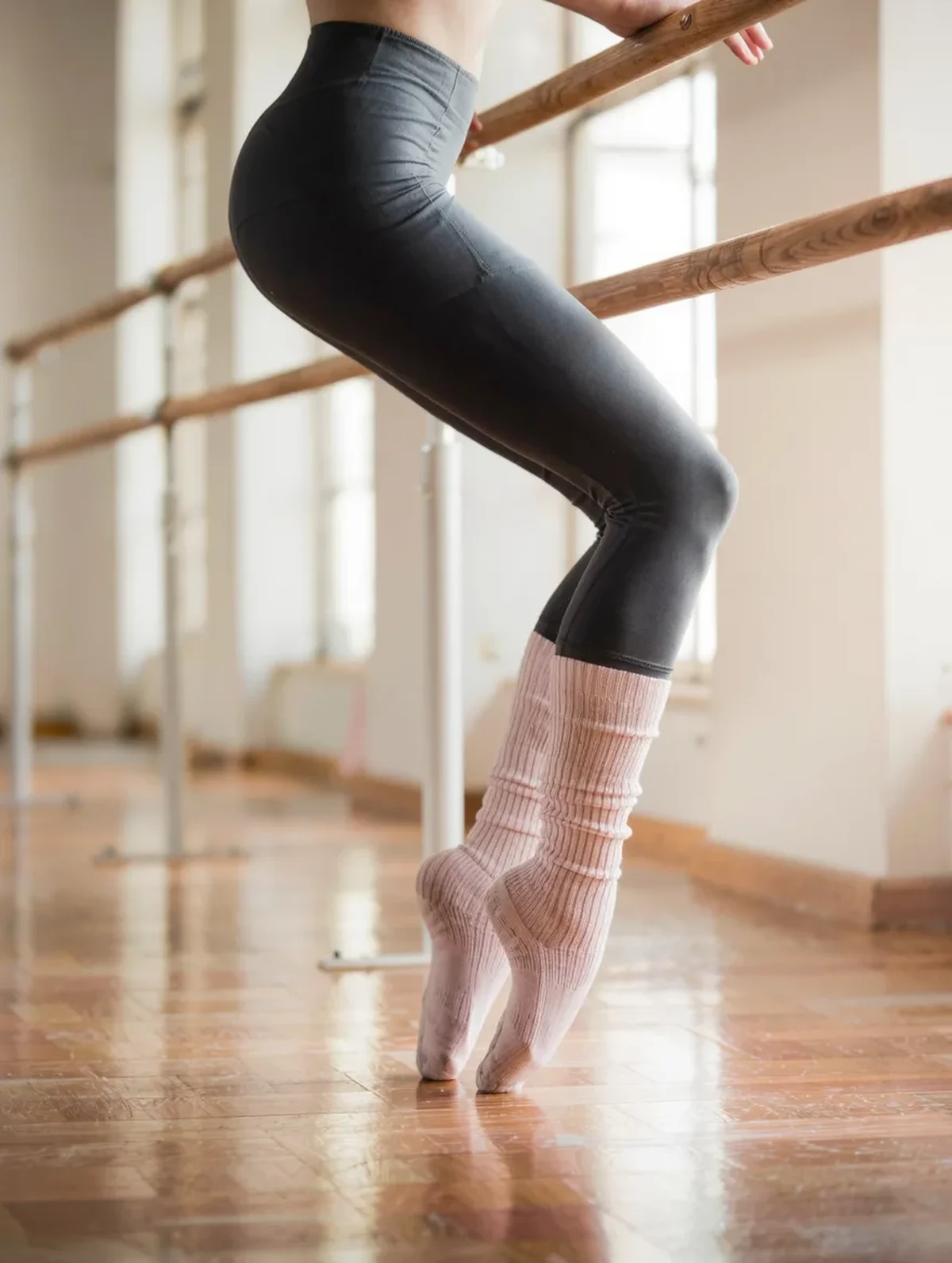
Relevé puts you on the balls of your feet with your heels lifted. In that position, the small muscles that run along your arch and into your toes are shortened and working hard at the same time.
Muscles are most likely to cramp in exactly that state. A shortened muscle that’s being asked to keep firing, especially when it’s tired, can tip into a sustained contraction it doesn’t release from.
Barre makes this more likely than most workouts for a simple reason: time. A relevé hold or pulse series can last 60 to 90 seconds, and class may return to it four or five times. Your feet rarely do that anywhere else in life.
Calves matter too. When the calf is tight or tired, the muscles that curl your toes try to help lift your heel. They aren’t built for that job, and they complain.
Are you gripping the floor with your toes?
This is the most common cause, and most people don’t know they’re doing it.
When balance feels shaky, your toes claw at the floor to hold on. The knuckles lift, the tips press down, and the arch muscles clamp. Hold that for a minute and a cramp is close behind.
Check yourself next class. In relevé, glance down. Your toes should be long and flat, spread like you’re pressing five piano keys. If the knuckles are white or raised, you’re gripping.
The cue that helps: press down through the ball of the big toe and the ball of the little toe, and let the toes themselves rest. Your weight should sit across the first three toes’ worth of the ball of the foot, without rolling to the outside edge.
A lighter hand on the barre can cause gripping as well. If your feet are clawing, give yourself a bit more support from the barre while your ankles get stronger.
How do you stop a toe cramp in the middle of class?
You don’t have to push through it, and you shouldn’t. A cramp that’s held tends to last longer.
- Lower your heels and stand flat
- Press the cramping toes flat against the floor, or use your hand to gently pull them back toward your shin
- Hold for 10 to 15 seconds while breathing slowly
- Shake the foot out and roll the ankle 5 times each direction
- Rejoin with a lower heel. Come up to half height for the rest of that series
If it returns straight away, do the remaining reps flat-footed. You’ll still work your thighs and seat. No instructor minds, and most will tell you to do exactly this.
5 Mistakes Everyone Makes With Barre Foot Cramps
1. Lifting the heels as high as possible. Maximum height means maximum shortening. A heel lifted 2 to 3 inches gives you the leg work with far less strain on the arch. Height comes later.
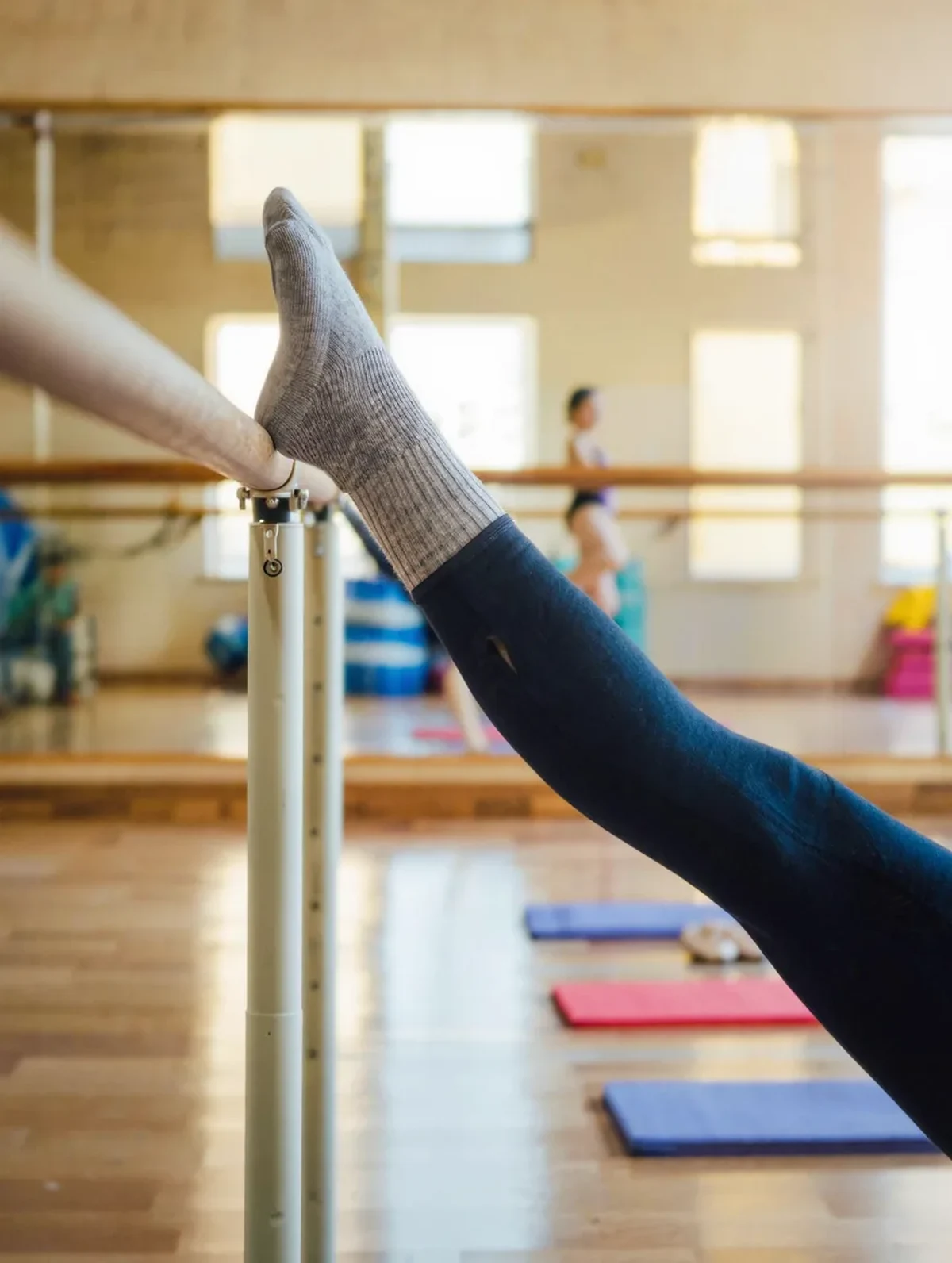
2. Wearing grip socks that are too tight. Socks that squeeze the forefoot stop your toes spreading and push them into a curl. If your socks leave marks, size up.
3. Skipping the foot warm-up. Feet go from shoes straight into loaded relevé. Thirty seconds of ankle circles and toe spreading before class makes a noticeable difference.
4. Arriving a bit dry. Hydration isn’t the whole story with cramps, but turning up to an evening class having had little to drink since lunch doesn’t help. A glass of water in the hour before is a reasonable habit.
5. Blaming weak feet and doing nothing. This one surprises people, because the fix is so small. Feet respond to training quickly. Two minutes a day changes things within a few weeks.
How do you build feet that don’t cramp?
Do this short routine once a day, barefoot. It takes about 2 minutes.
- Toe spreads: spread your toes as wide as you can, hold 5 seconds, relax. 10 reps
- Short foot: keep your toes flat and gently draw the ball of your foot toward your heel so the arch lifts, without curling the toes. Hold 5 seconds. 10 reps per foot
- Slow calf raises: rise for 2 counts, lower for 4, toes relaxed. 2 sets of 12
- Calf stretch: heel down against a wall or step, 30 seconds per side
Rolling the sole of each foot over a tennis ball for a minute after class also feels good and helps tired arches settle.
Most people find cramps fade noticeably within 3 to 4 weeks of regular classes plus this routine, as the foot muscles build endurance.
FAQ: Barre Toe Cramp Questions, Answered
Is it bad to keep getting toe cramps in barre?
Occasional cramps in the first couple of months are common and usually harmless. They’re a sign your feet are doing work they’re new to. They should become less frequent as you get stronger.
Do bananas or electrolytes prevent foot cramps?
The evidence is mixed. Fatigue in an overworked, shortened muscle seems to be the bigger factor in exercise cramps. Eating and drinking normally through the day is sensible, but foot strength and relaxed toes will do more for barre cramps.
When should I see a professional about foot cramps?
See a doctor or podiatrist if cramps are frequent outside of exercise, wake you at night regularly, come with numbness, tingling, or swelling, or haven’t improved after 6 to 8 weeks. This is general information, not medical advice.
TL;DR:
- Toes cramp in relevé because small foot muscles are working hard in a shortened position for a long time
- Gripping the floor with your toes is the most common trigger, so keep toes long and flat
- Mid-class: heels down, toes pressed back for 10 to 15 seconds, then rejoin at half height
- Lower your heel height, check your sock size, and do 2 minutes of foot work a day
Toe cramps in barre relevé usually ease within a month once your feet build endurance and your toes stop gripping. Until then, drop your heels the moment one starts, stretch it out, and carry on. Your legs will get the same workout either way.
See It in Motion
Seen here: Super High Waist Embossed Yoga Leggings with Inner Pocket — shop it on bubblelime.com
Keep Reading
This article is for general informational and styling purposes only. Fit, sizing, and product availability may vary.