Why Your Thighs Shake in Barre (Good Sign or Warning Sign?)

Quick Answer: Shaking thighs in barre usually mean the muscles are fatiguing under sustained, small-range work, which is the point of the class. It’s a good sign when the shake appears during a hold and settles when you rest. It’s a warning sign when the shake comes with sharp pain, a joint feeling unstable, or a change in how your knees or hips track. Keep the range small, engage the right muscles, and rest between sets.
The instructor says to hold the leg at the top for eight counts. You’re on count three and your thighs start to tremble. By count six, you’re convinced you’re doing something wrong, and you drop the leg early.
Shaking is one of the most misunderstood parts of barre. It can mean you’re working hard, but it can also mean your form is off, so it’s worth knowing which one you’re dealing with.
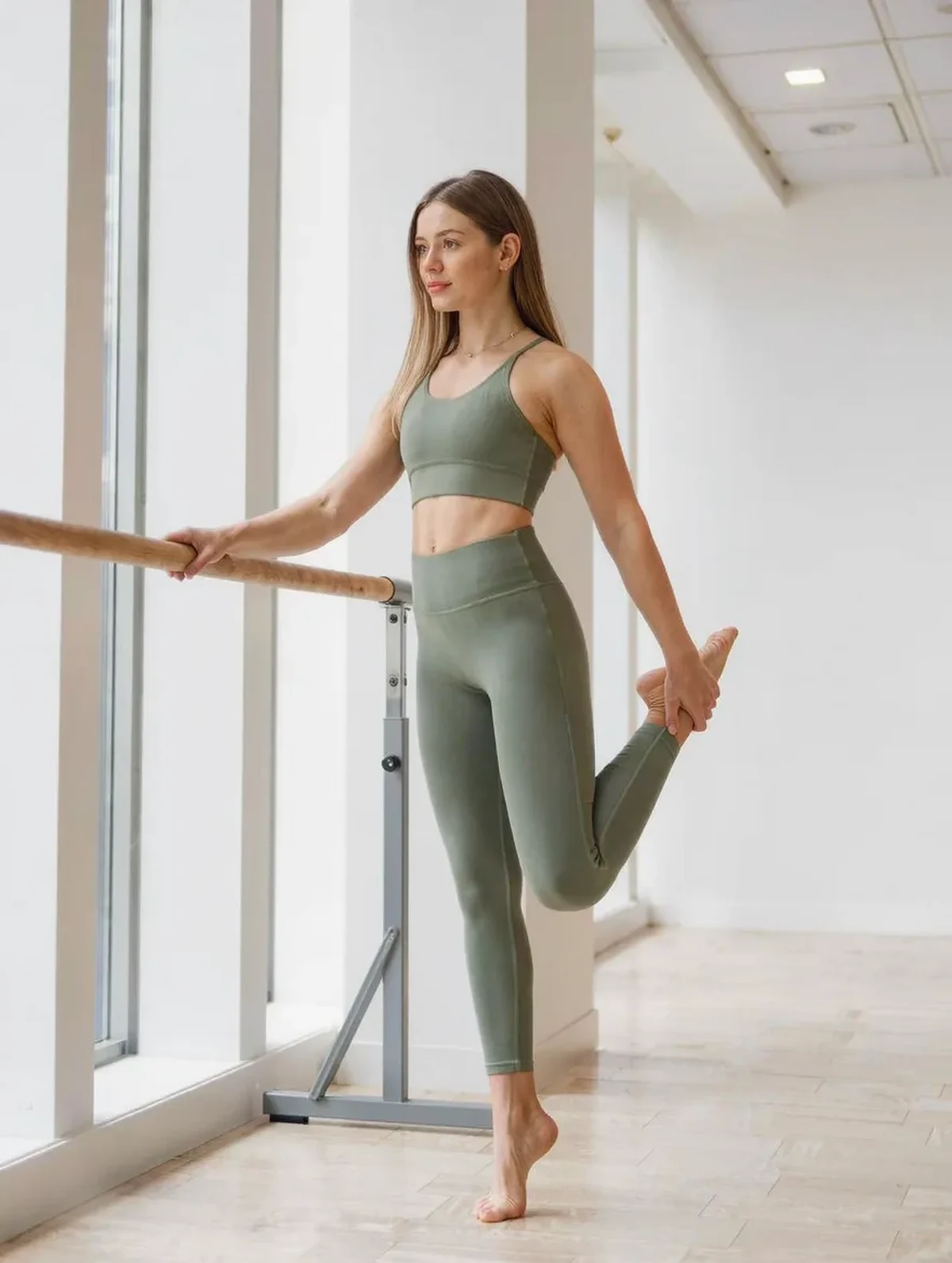
What actually causes the shake during barre?
Barre holds are built on isometric and small-range contractions. You’re asking the muscles in your thighs, hips and glutes to stay active without much movement. Those muscle fibers fatigue, and the nervous system responds by firing unevenly, which you feel as trembling.
That’s why the shake usually shows up late in a set, not on the first rep. A mild tremor during the last few counts of a hold tells you the muscle has been doing real work. Most people notice it most in the inner and outer thighs, and in the quads when they do pulses and small bends.
Your muscles also get better at this with repetition. Over a few weeks of consistent classes, the shake tends to start later and settle faster, because the fibers learn to share the load.
Myth vs Fact: If your thighs shake, you’re not doing it right
Myth: a shaking thigh means your form has failed and you should stop.
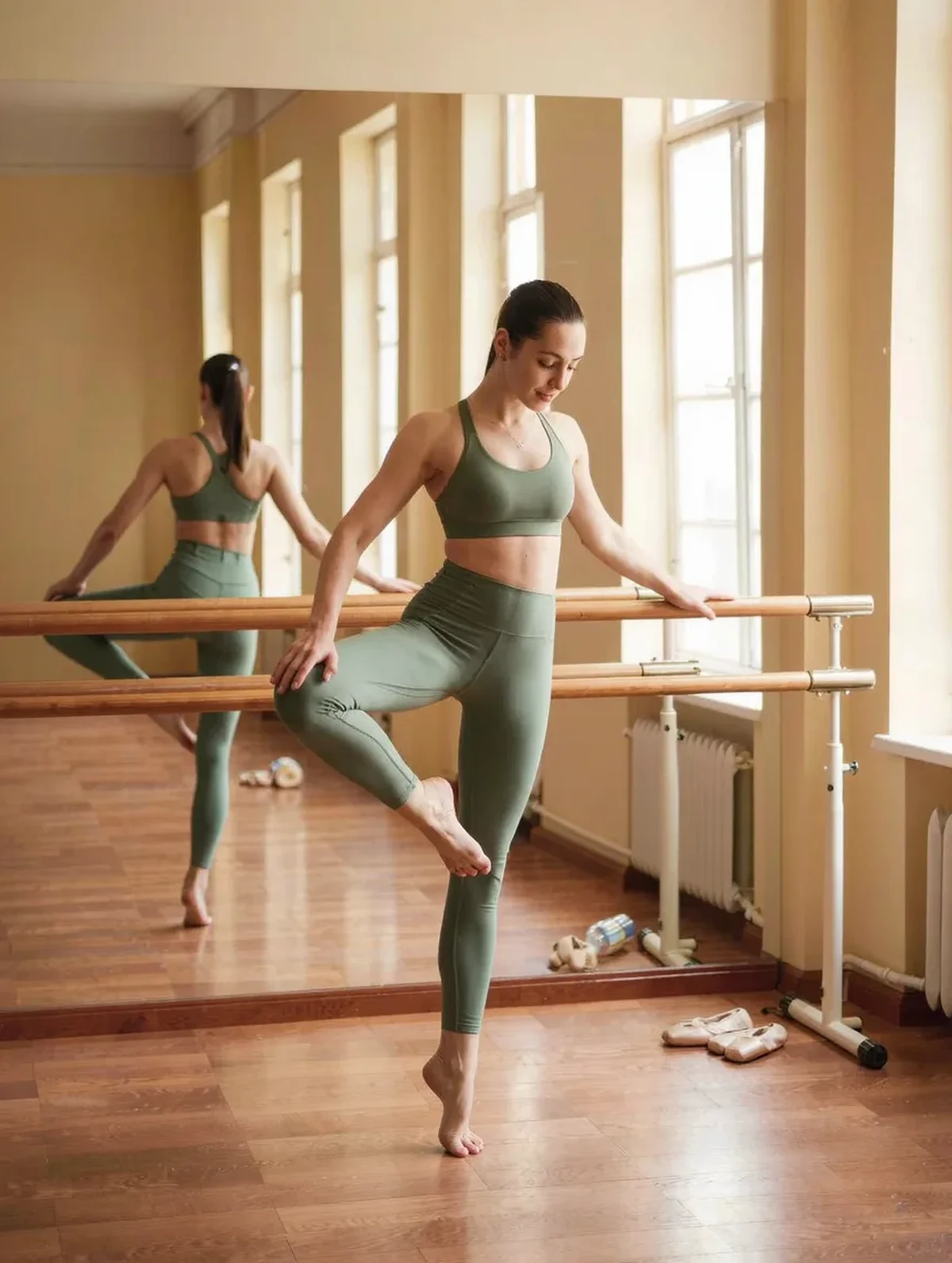
Fact: a shake is often a sign of effort. The form question is different. Ask whether your hips are level, your ribs are stacked over your pelvis, and your knees are tracking straight over your toes. If those are in order, a shake is normal. If the shake is making your lower back arch or your knee roll inward, fix that first.
How do you tell productive shake from a sign to back off?
Use the body’s signals as a guide, not the instructor’s count.
- Productive shake: trembling during the last few counts of a hold, a dull burn, and recovery within a minute of rest. Keep going at a smaller range if needed.
- Form problem: the shake is paired with a sway in the lower back, a hip hiking up, or a knee collapsing inward. Shrink the range and reset your alignment.
- Stop-and-check signal: sharp pain in the joint, a click that comes with pain, a sense the knee or hip is unstable, or swelling afterward. Stop the movement and talk to a professional.
When in doubt, drop the range. A small, controlled hold done well is more effective than a large, sloppy one.
What Nobody Tells You About Shaky Legs in Class
Many people feel embarrassed when their legs shake in front of others. Nearly everyone in a barre room has shaken at some point, including people who have taken classes for years.
Try this on your next class: take a breath, soften your jaw, and let the shake happen without fighting it. Keep the working muscle engaged, but drop your leg height an inch if the tremor takes over your posture. You’ll often find the shake fades within a few counts. You’re still getting the work, and your form stays clean.
FAQ: Shaky Thighs in Barre, Answered
Should I keep going when my thighs shake?
Yes, if your form stays clean and the shake is the normal fatigue kind. Stop the set and rest if the shake comes with pain, poor alignment, or a loss of control.
Does shaking mean I’m getting stronger?
It’s a sign of effort and fatigue, not a direct measure of strength. Strength shows up as holds that stay steady over time and as the ability to do a full set with control.
When should I see a doctor?
See a doctor or physical therapist if you have knee or hip pain during class, clicking that hurts, swelling, or a feeling that a joint gives way. These can point to an issue that needs assessment.
This is general information, not medical advice.
TL;DR:
- Thigh shaking in barre usually comes from muscle fatigue during small-range holds, which is part of the work.
- A shake that settles with rest and keeps your alignment is productive. A shake with a sway, hip hike or knee collapse means fix your form.
- Stop and check if you feel sharp joint pain, instability, or swelling.
- Shrink the range when needed. A controlled hold beats a big, sloppy one.
Next class, let the shake happen and keep your hips level. You’re not failing when your legs tremble. You’re just doing the work the barre was designed to give you. This is general information, not medical advice.
See It in Motion
Seen here: High Waist Printed Bootcut Yoga Pants with Pockets — shop it on bubblelime.com
Keep Reading
This article is for general informational and styling purposes only. Fit, sizing, and product availability may vary.