Why Your Standing Leg Burns More Than Your Working Leg in Barre

Quick Answer: Your standing leg burns more in barre because it’s holding your whole body weight in one fixed position for the entire set, while the working leg only lifts its own weight and gets tiny rests between pulses. A static hold restricts blood flow, so the burn builds faster. A soft knee, weight spread across the whole foot, and a level pelvis make it far more manageable.
The instructor says the set is for your seat. You’re pulsing the back leg, counting down from 16, and the leg that’s on fire is the other one. The one that’s supposed to be just standing there.
You’re not doing it wrong. Standing there is the harder job.
Why does the standing leg fatigue faster than the leg that’s moving?
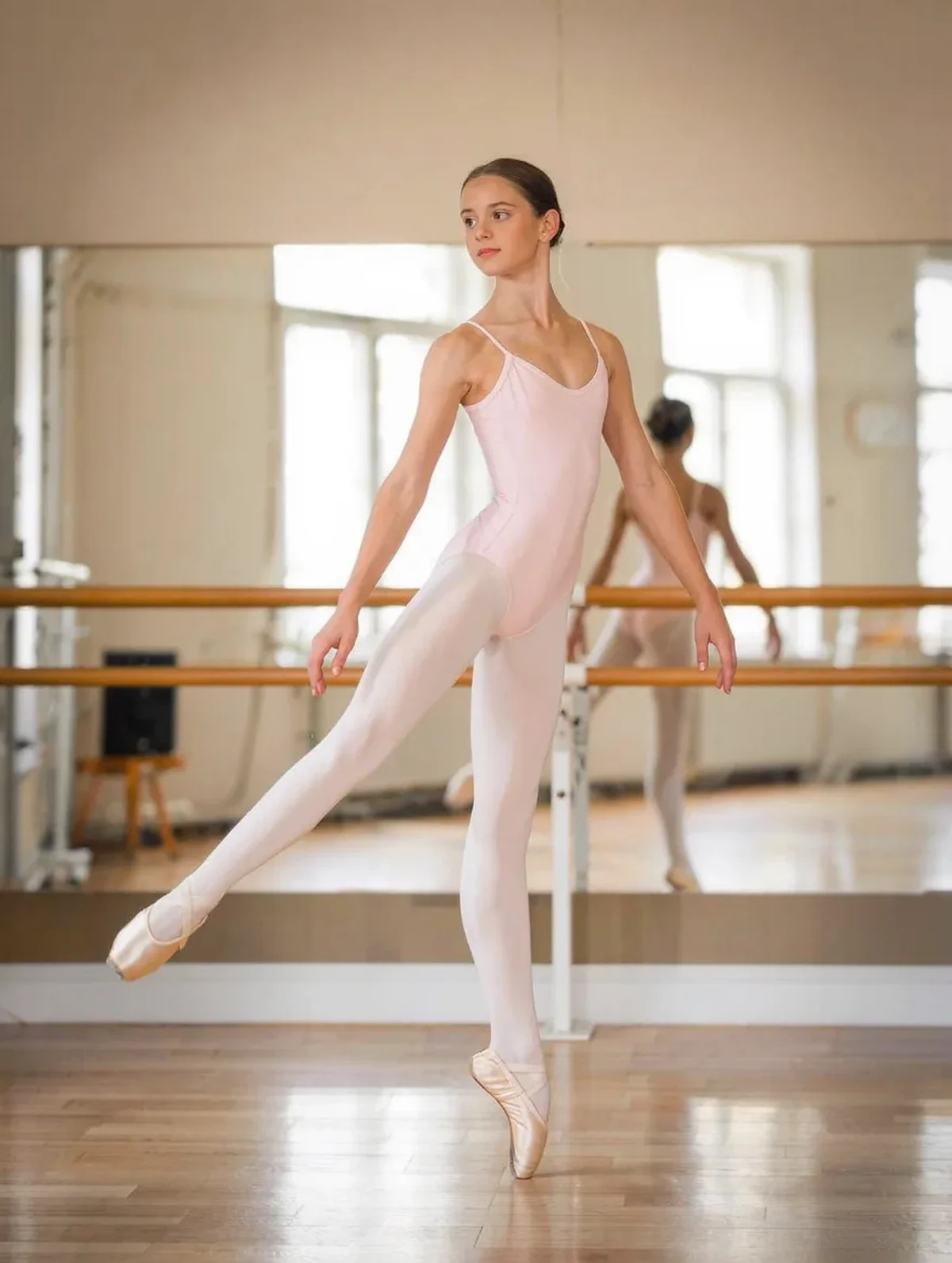
Start with load. The working leg lifts only its own weight, which is roughly 15 to 18 percent of your body weight. The standing leg supports everything else, plus it has to stop you from tipping while the other leg swings around behind you.
Then there’s the type of work. The working leg moves, so its muscles squeeze and release. Each release lets blood back in. The standing leg holds one position without a break. A sustained hold squeezes the small vessels inside the muscle, so less oxygen arrives and the by-products of effort hang around. That’s the burn.
A 90-second seat series can mean 90 seconds of nonstop hold for the standing side. Few moves in class ask for a longer continuous effort.
Which muscles are actually working in the standing leg?
More than you’d guess from the outside.
- Gluteus medius, the muscle on the outer hip, keeps your pelvis level so the free hip doesn’t drop. This is usually where the deep ache lands.
- Quads hold the slightly bent knee. A soft knee is a small squat you never get to stand up from.
- Calf and the small muscles of the foot make constant tiny corrections to keep you balanced.
- Deep hip rotators hold your turnout or keep your knee tracking forward in parallel.
So the standing side is doing a single-leg balance, a mini squat hold, and a hip stability drill at the same time. If your outer hip burns before anything else does, that’s the right muscle complaining.
How should you set up your standing leg so it lasts the whole set?
Small adjustments change how long you last.
Soften the knee, about an inch. Locked, you hang on the joint and your glute switches off. Bent too deep, your quad burns out by count eight. Think unlocked, not squatting.
Find three points under the foot. Base of the big toe, base of the little toe, center of the heel. If your toes are gripping the floor, your weight is too far forward.
Keep the pelvis level. Put a hand on each hip bone before the set starts. If the standing hip is jutting out to the side, slide it back under your ribs. You’ll feel the outer hip turn on right away.
Hold the barre lightly. Two or three fingers. A white-knuckle grip means you’re leaning, and leaning shifts work from the hip into your shoulder and low back.
Breathe on a count. In for four pulses, out for four. Holding your breath makes any burn feel worse.
5 Mistakes Everyone Makes With the Standing Leg
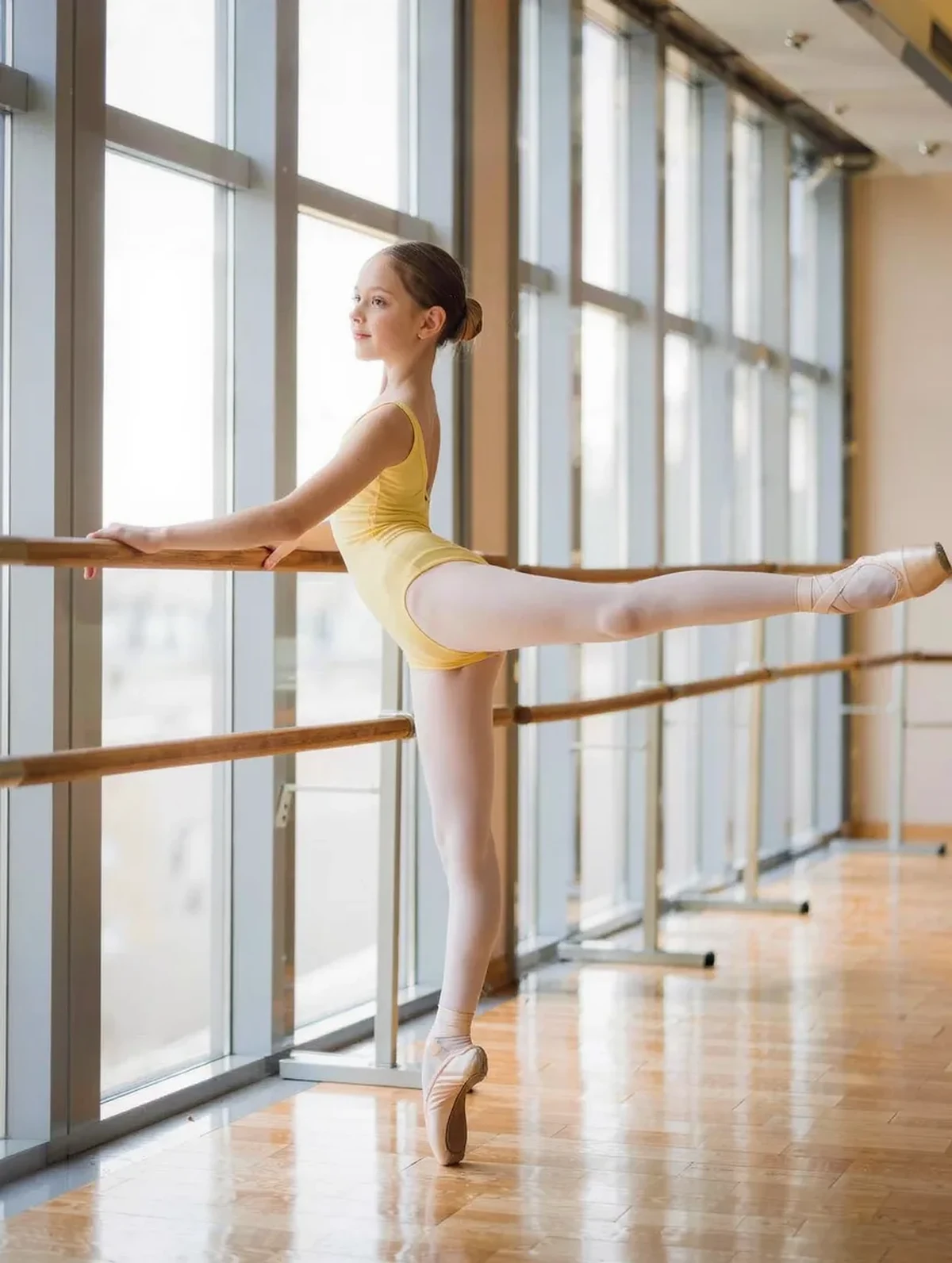
- Locking the knee to rest. It feels like relief for about five seconds. Then the hip sinks, the low back takes over, and the working glute gets less out of the set too.
- Sinking into the hip. The standing hip pushes out sideways and you hang off it. It’s the same posture as waiting in a long line, and it takes the outer hip muscle out of the job.
- Letting the arch collapse. When the foot rolls in, the knee follows. Lift the arch gently by pressing the big toe down without curling it.
- Leaning the chest far forward to get the back leg higher. Height comes from the hip. A 4-inch lift with a tall spine does more than a 12-inch lift with a tipped body.
- Always starting on the same side. This one catches even regulars. Whichever side goes second is working on a standing leg that already did a full set of pulses as the working leg. Notice which side your class starts with, and at home, alternate.
Is the burn a sign of weakness or a sign it’s working?
Mostly a sign it’s working. Single-leg endurance is a specific skill, and you can lift heavy in the gym and still shake here in week one.
It adapts quickly. With 2 or 3 classes a week, most people notice the standing leg lasting longer within 3 to 4 weeks. The burn doesn’t vanish. It just shows up later in the set.
Know the difference between effort and warning, though. A dull, spreading ache in the muscle that fades within a minute of shaking it out is effort. A sharp or pinching feeling at the front of the hip, inside the knee, or under the kneecap is a cue to stop, reset your position, and take the smaller version. Pain that lingers after class or keeps returning is worth showing to a physical therapist. This is general information, not medical advice.
How do you build standing-leg endurance outside class?
Three short drills, 3 days a week. Total time is under 5 minutes.
- Single-leg stand with a soft knee. Hold a counter with one finger. 30 seconds per side, 2 rounds. Add 10 seconds a week until you reach 60.
- Hip hike. Stand sideways on a low step with one foot hanging off. Let the free hip drop an inch, then lift it level. 2 sets of 10 per side.
- Slow calf raise on one leg. Up for 2 counts, down for 3. 2 sets of 8 to 12.
An easy habit to stack on top: brush your teeth standing on one leg, and switch legs when you switch to the bottom teeth. That’s two minutes of practice a day you didn’t have to schedule.
FAQ: Barre Standing Leg Questions, Answered
Should I take a break when my standing leg shakes?
Shaking by itself is fine and expected. Take a break when your form goes: the hip drops, the knee locks, or you’re hauling on the barre. Stand on both feet for 4 counts, reset, and rejoin. A clean half set beats a sloppy full one.
Why does one standing leg burn more than the other?
Nearly everyone has a preferred standing leg from years of habit, so one side has more endurance. Class order matters too, because the second side starts already tired. Give the weaker side an extra round of the single-leg stand at home.
Do grip socks make a difference for the standing leg?
They do. On a slick floor your foot and calf work overtime just to keep you from sliding, which adds fatigue below the knee. Socks with grip across the whole sole let the foot relax so the hip can do its job.
TL;DR:
- The standing leg holds your full body weight in one position for the whole set, and static holds limit blood flow, so it burns before the moving leg does
- Outer hip, quad, calf, and foot are all working at once
- Set up with a soft knee, three points of the foot, a level pelvis, a light hand on the barre, and steady breathing
- Expect better endurance in 3 to 4 weeks, and add single-leg stands, hip hikes, and calf raises 3 days a week to speed it up
Next class, when the supporting side lights up halfway through the seat series, you’ll know what’s going on. That leg is getting a full workout of its own. Set it up well, stay tall, and let it shake.
See It in Motion
Keep Reading
This article is for general informational and styling purposes only. Fit, sizing, and product availability may vary.