Why Your Arms Give Out in the Barre Arm Series — and How to Last the Full Set

Quick Answer: Arms usually give out in barre because the shoulders lift up, the elbows lock, and the whole set becomes a shoulder workout instead of an arm workout. Keep your shoulders low, soften the elbows slightly, and use lighter weights so your arms can last the full series.
You’re in the middle of the arm sequence, and suddenly your biceps are burning and your forearms feel like jelly. Before you blame your fitness, check how your arms are working. In most cases, a few small technique changes make a big difference.
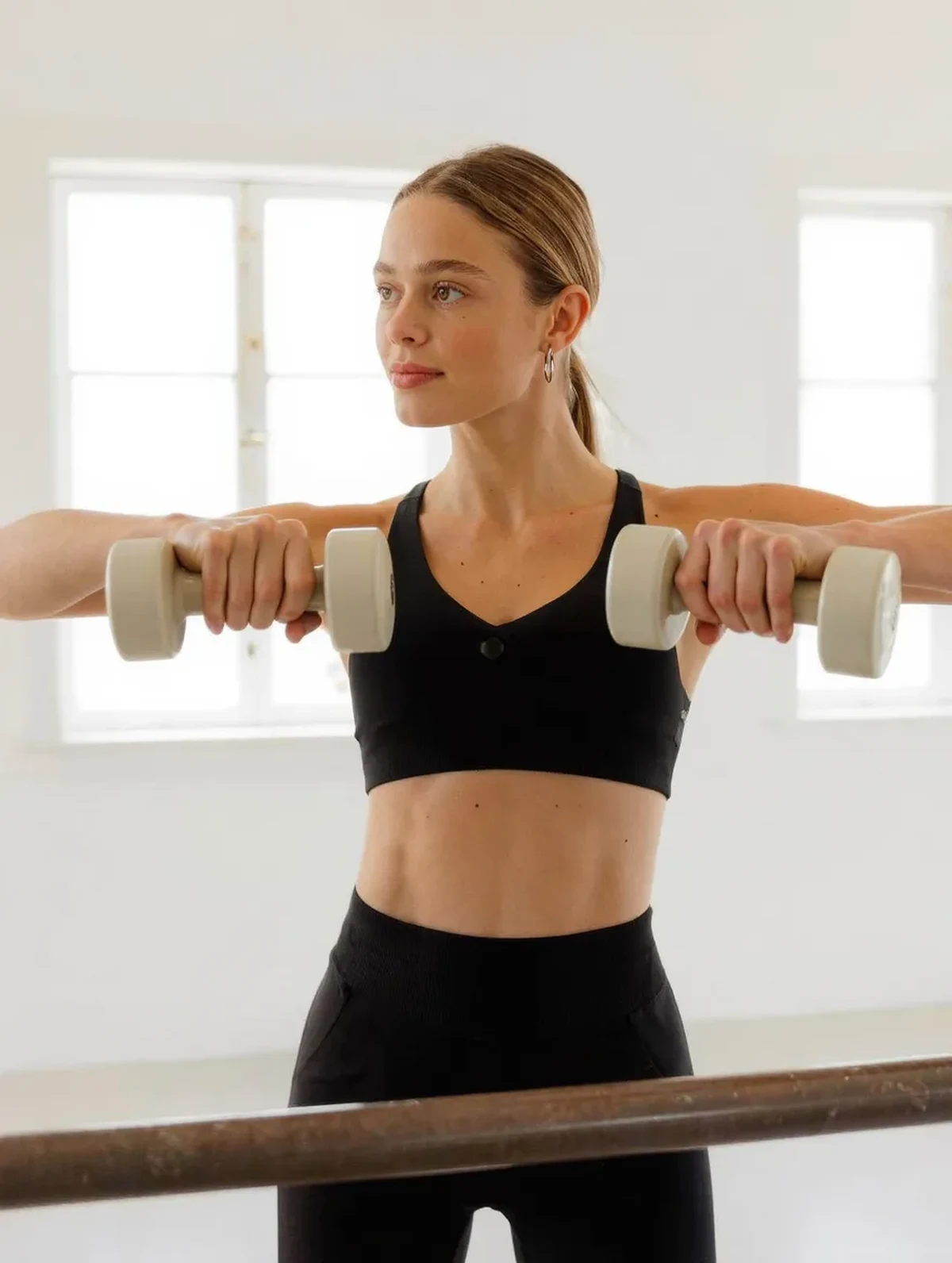
Why do my arms burn so fast in barre?
Barre arm work is built on small, controlled movements held for a long time. Most people fatigue quickly for three reasons: the shoulders creep up toward the ears, the elbows lock straight, and the weights feel heavier because the breath is held.
Here’s the sneaky part: when your shoulders rise, the upper traps take over, and that muscle tires long before your arms do. Relax your neck and drop your shoulder blades down your back.
If you feel sharp pain in a joint, stop the move and check with a qualified instructor or your doctor.
What should I change first to last the whole arm set?
Start with these adjustments:
- Lower the weight: Try 1 to 2 pounds instead of 3 or 5 for the first few weeks.
- Soften the elbows: Keep a tiny bend so the muscle works through its range instead of locking.
- Breathe out on effort: Exhale as you lift, and inhale as you lower.
Use the 5-second hold as a check: if your arm drops or shakes before the instructor’s count, it’s a sign to lighten the load.
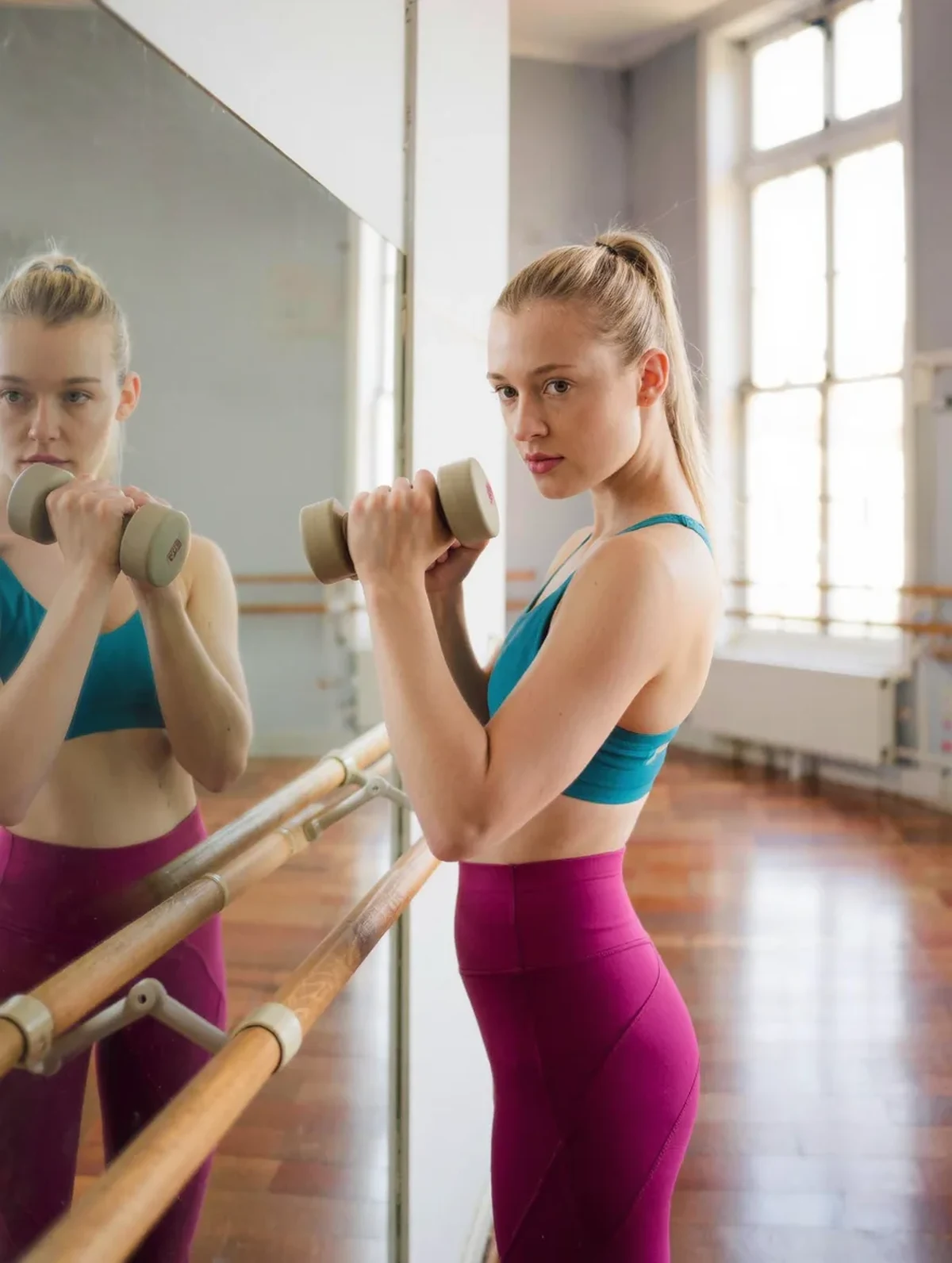
Myth vs Fact: Heavier Weights Make Barre Arms Stronger Faster
Myth: Going heavy from day one is the fastest way to see results.
Fact: Barre arm work relies on endurance and control. Heavy weights often pull the shoulders into the wrong pattern, which leaves you tired and sore. Lighter weights with better form build the muscle you’re after.
Once you can finish the full set with good posture, add a small increase, maybe half a pound, every two or three weeks.
How can I recover faster after a tough arm class?
Give your arms a day of gentle movement. Light walking, easy shoulder rolls, and a few slow arm circles help blood flow without adding stress. Drink water and get enough sleep, since muscles rebuild during rest.
If soreness peaks after 24 to 48 hours and then fades, that’s typical. If it lingers or feels joint-deep, scale back for a week.
FAQ: Barre Arm Fatigue Questions, Answered
Are shaky arms a sign I’m getting stronger?
Shaking usually means you’re working near the edge of your current endurance. It’s a good signal, but form matters more than shaking.
Can I use no weights at all?
Yes. Bodyweight arm work with the same tempo and posture can be very effective, especially while you build control.
Should I skip barre if my shoulders hurt?
Shoulder pain is worth checking with a doctor or physical therapist before continuing heavy arm work.
This is general information, not medical advice. If something hurts or changes, get it checked by a licensed professional.
TL;DR:
- Arm fatigue in barre usually comes from raised shoulders, locked elbows, and holding your breath.
- Start with lighter weights, soft elbows, and steady exhales on effort.
- Build endurance first, then add weight in small steps.
- Joint pain, not muscle burn, means stop and get checked.
Your arms don’t need to be perfect on day one. Lower the weight, keep the shoulders down, and let the endurance build week by week.
See It in Motion
Seen here: Super High Waist Embossed Yoga Leggings with Inner Pocket — shop it on bubblelime.com
Keep Reading
This article is for general informational and styling purposes only. Fit, sizing, and product availability may vary.