Why Your Hip Flexors Take Over in Barre Leg Work

Quick Answer: Hip flexor takeover in barre happens when the glutes are slow to switch on, so the muscles at the front of the hip stabilise and lift at the same time. The tell is a burning, gripping sensation at the front crease of the hip during rear leg work, and a seat that feels unworked afterwards. The fix is not stretching the hip flexors — it is shortening the range, squaring the pelvis, and giving the glute a head start.
There is a specific and very recognisable moment in a barre class. The instructor cues a rear leg lift, promises you will feel it in your seat, and what you actually feel is a hot, cramping band across the front of your hip on the standing side. Everyone else looks fine.
You are not doing it wrong out of weakness. You are doing it in the wrong order.
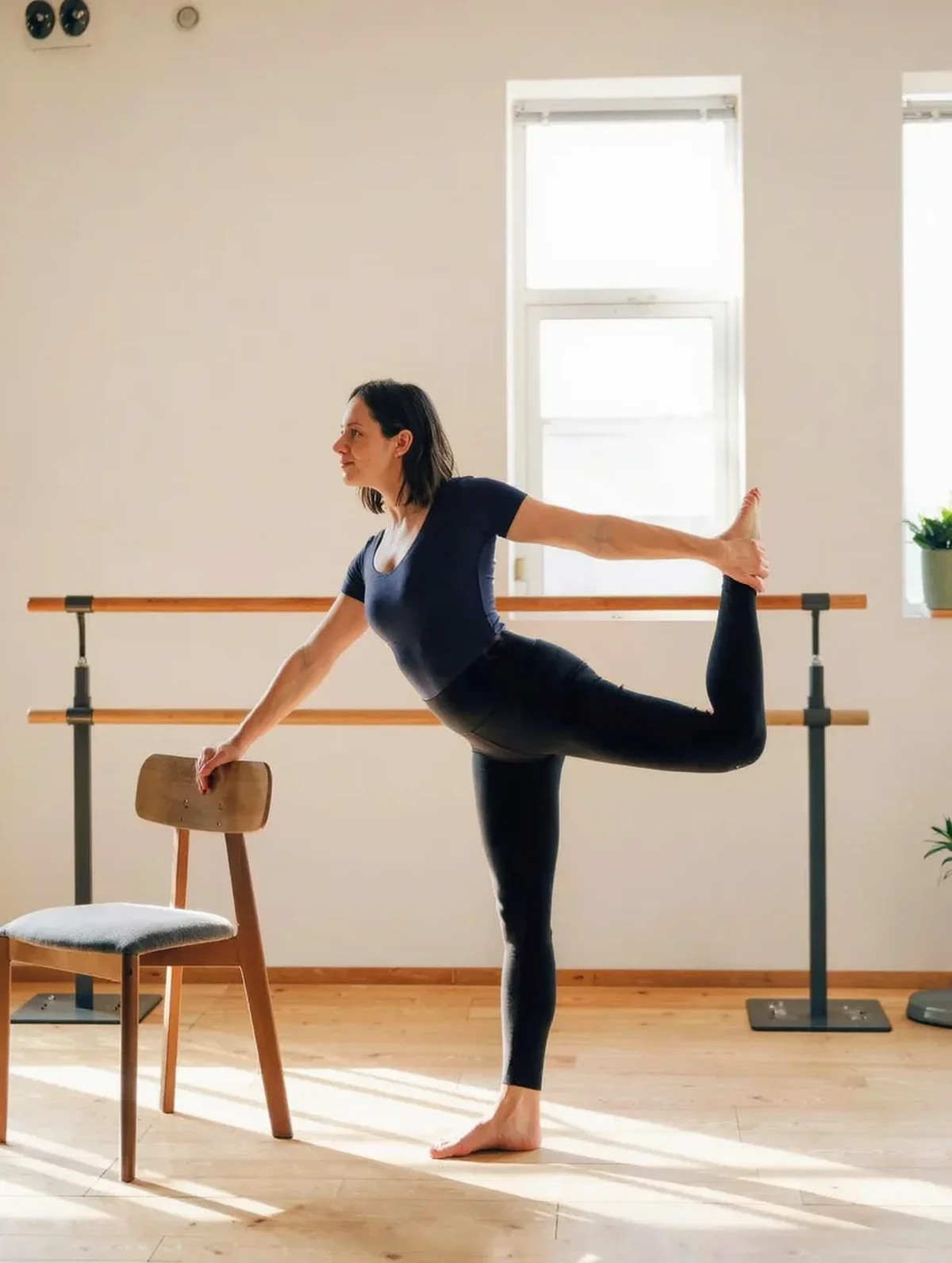
What does hip flexor takeover actually feel like?
It has a distinct signature, and once you can name it you will spot it in about four different exercises.
During rear leg lifts, a sharp gripping sensation across the front crease of the standing hip, not the working one. Sometimes a cramp in the front of the thigh on the lifting leg too.
During any sustained lift, the burn arrives in the front of the hip within about fifteen seconds and never migrates to the seat, no matter how many pulses you do.
Afterwards, the giveaway. The next day you are sore in the front of the hips and the quads, and the glutes feel like they had the day off. In a class that was substantially glute work, that is the clearest evidence there is.
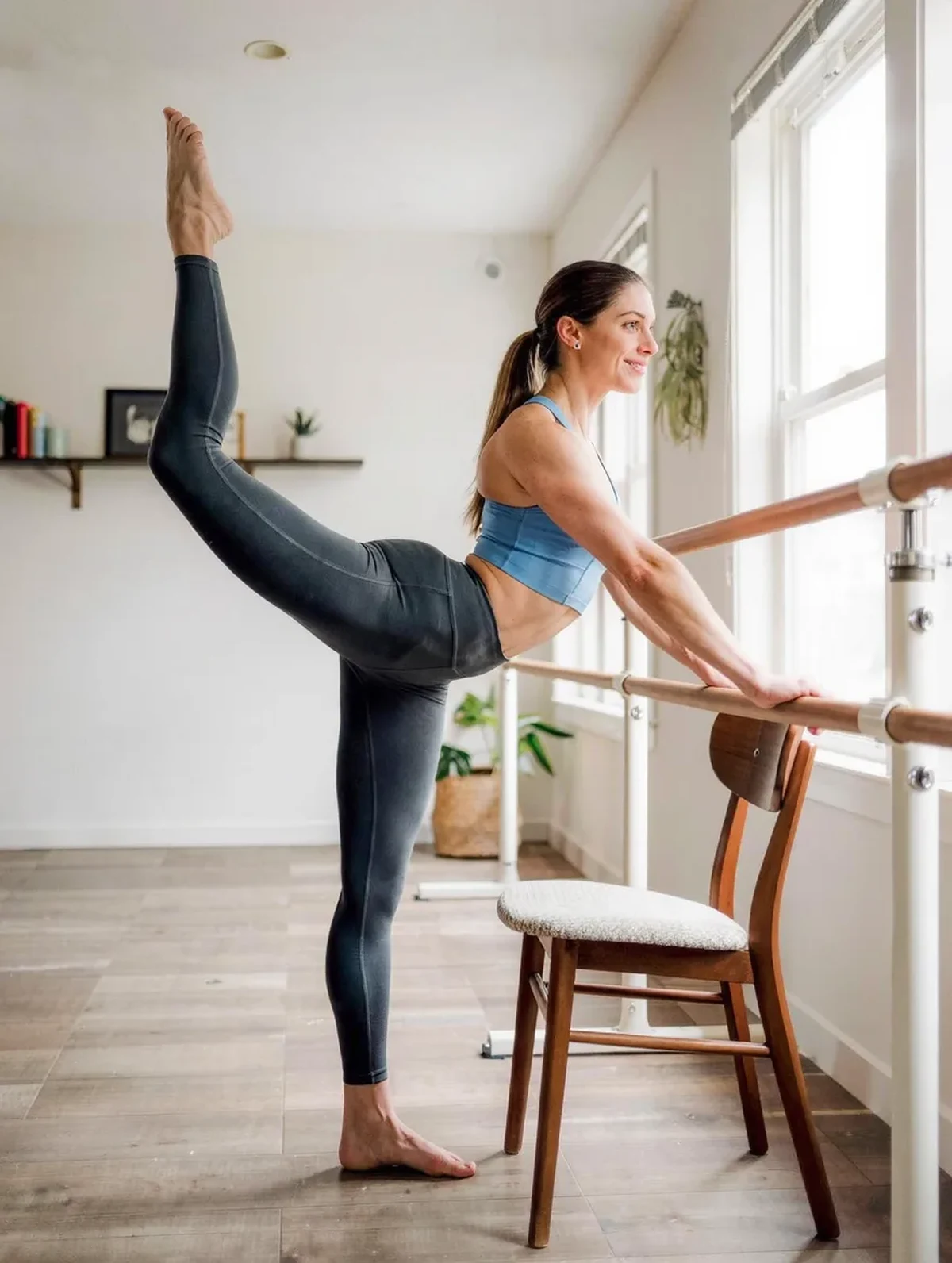
And a visual cue. If you film yourself, you will usually see the pelvis rotate open on the lifting side and the low back arch as the leg goes back. The leg is getting height from the spine and the pelvis rather than from hip extension, and the hip flexors on the standing side are working overtime to hold you up while it happens.
That last point is the mechanism. Your hip flexors are not being greedy. They are covering.
Why do the glutes let this happen?
Three overlapping reasons, and only one of them is about strength.
Timing, not capacity. Muscles have to switch on in a sequence, and the gluteus maximus is often late — it fires after the hamstrings and the spinal muscles have already started. When the prime mover is late to the job, other muscles have already taken the slack, and by the time the glute arrives the pattern is set. This is an activation timing issue, and the same person can have perfectly strong glutes on a bridge and still show the pattern on a standing lift.
Sitting. Hours in a chair hold the hip flexors in a shortened position and the glutes in a lengthened, unstimulated one. After a long day at a desk, the front of the hip is already tight and dominant when you walk into class. This is why an evening class often feels different from a weekend morning one.
Range. Real hip extension — moving the thigh behind the body line — is limited. Most people have somewhere between ten and twenty degrees available. Barre leg lifts routinely go well past that, and past the available range the movement has to come from somewhere else: the lumbar spine arches and the pelvis tips and rotates. In that position the glute is at a mechanical disadvantage and the takeover is almost guaranteed.
So the person lifting their leg highest in the room is frequently the one getting the least out of the exercise. Worth remembering next time you are comparing.
Myth vs Fact: Tight Hip Flexors
Myth: My hip flexors are tight, so I need to stretch them more.
Fact: Most hip flexor tightness in this pattern is protective, not structural. The muscle feels tight because it is working constantly to stabilise a pelvis that nothing else is controlling. Stretching it gives you fifteen minutes of relief and changes nothing about the sequencing, which is why people can stretch their hip flexors for months with no change in how class feels. The tightness is a symptom.
Myth: I just need stronger glutes.
Fact: Usually you need earlier glutes. Plenty of people with this pattern can hold a solid single-leg bridge. The problem appears specifically in standing, weight-bearing positions where the timing matters. Strength work helps, but the ordering fix works faster.
Myth: The higher the leg, the more effective the exercise.
Fact: Past your available hip extension, extra height comes from the spine. A four-inch lift with a level pelvis loads the glute considerably better than a twelve-inch lift with an arched back, and it will feel harder, which is the point.
Myth: Feeling it in the front means it is working.
Fact: It means the wrong thing is working. The front of the hip burning during a seat exercise is the clearest possible signal to change something.
How do you fix it during class, in real time?
Four adjustments, in the order to try them.
1. Cut the range in half. Lift the leg roughly a third as high as you think you should and stop the moment you feel the low back start to arch. Put a hand on your low back for one rep to find the point — you will feel it move. This single change fixes the pattern for a large share of people, immediately.
2. Square the pelvis and keep it there. Both hip bones facing the floor in quadruped, or both facing forward when standing. The instinct is to open the hip to get height. Resist it. If you are at the barre, a light contact with both hip points against the barre or a wall gives you feedback.
3. Exhale as you lift. Holding your breath fixes the ribcage and encourages the back to arch. A slow exhale on the lift lets the ribs settle, keeps the abdominal wall engaged and makes it considerably harder to cheat into extension.
4. Pre-fire the glute. Before the set, squeeze the working glute hard for three to five seconds with the leg still down. It gives the muscle a head start on the timing and makes it much more likely to lead the movement. It looks like nothing and it works.
If all four are in place and the front of the hip still takes over, shorten the lever — bend the working knee to ninety degrees for rear lifts. Less leverage, less compensation, and it is a legitimate regression rather than a lesser version.
What should you do outside class?
Ten minutes, twice a week, aimed at timing rather than size.
Glute bridges with a pause. Twelve reps, two-second hold at the top, squeezing deliberately. The pause is the important part — it trains the contraction rather than the momentum.
Single-leg bridges. The progression that most closely resembles what barre asks for, because it demands the pelvis stays level under a one-sided load. Eight a side. If your pelvis drops or twists, go back to two legs.
Standing hip extension against a wall. Face a wall, hands on it, lift one leg straight back only as far as you can with a still low back. Ten slow reps a side. This rehearses the exact pattern that goes wrong in class, in a position where you can feel the cheat.
Hip flexor mobility, but after. Not instead. A ninety-second half-kneeling stretch with the pelvis tucked, done after the strength work rather than before, is a reasonable addition. Doing it before can make the glute work feel less stable.
And break up the sitting. Standing up every forty-five minutes does more for hip flexor length than any stretch, because the problem is duration rather than the position itself.
Give it three weeks. This pattern responds faster than most, because you are reorganising a sequence rather than building tissue.
FAQ: Hip Flexors and Barre Questions, Answered
Is it normal for the front of my hip to click during leg work?
A painless click or snap at the front of the hip as the leg moves is common and usually a tendon moving over a bony prominence. If it is painless and not new, it is generally nothing. If it comes with pain, catching, or a feeling that the hip might give way, get it assessed.
Should I stop doing rear leg lifts entirely?
No — just do them smaller. The exercise is fine; the range most people use is not. A lift that stays within true hip extension with a level pelvis is one of the better glute exercises in a barre class.
Why is it worse on one side?
Almost everyone has a dominant side, and the differences show up most in single-leg work. Standing habits — always carrying a bag on one shoulder, always crossing the same leg — build asymmetry over years. Do the corrective work on both sides but add one extra set on the weaker one for a month.
TL;DR:
- Hip flexor takeover is a timing problem, not a strength problem — the glutes fire late and the front of the hip covers for them.
- The tell is burning in the front crease of the hip during seat work, and no soreness in the glutes the next day.
- Fix it in class by halving the range, squaring the pelvis, exhaling on the lift and pre-squeezing the glute for five seconds.
- Stretching the hip flexors treats the symptom. Paused bridges and standing hip extension treat the cause, in about three weeks.
The most useful thing about this pattern is how quickly it changes once you stop chasing height. The first class where you lift the leg four inches, feel your seat properly, and finish sore in the right place tends to be the class that rewrites how you do everything else at the barre.
See It in Motion
Seen here: Racerback Tank Top - White — shop similar styles on bubblelime.com
Keep Reading
This article is for general informational and styling purposes only. Fit, sizing, and product availability may vary.