Why Barre Stops Feeling Hard Around Week Eight

Quick Answer: Around week eight, most people stop shaking, stop being sore, and conclude the class has stopped working. What actually happened is neuromuscular efficiency - your nervous system learned the movements and now recruits fewer motor units for the same result. The fix is not a harder class; it is adding load, slowing the tempo, reducing the base of support, or extending time under tension. All four are available inside the same class you already attend.
Week two you could barely walk down the stairs. Week eight you are doing the same thirty-minute thigh section and thinking about what to have for dinner.

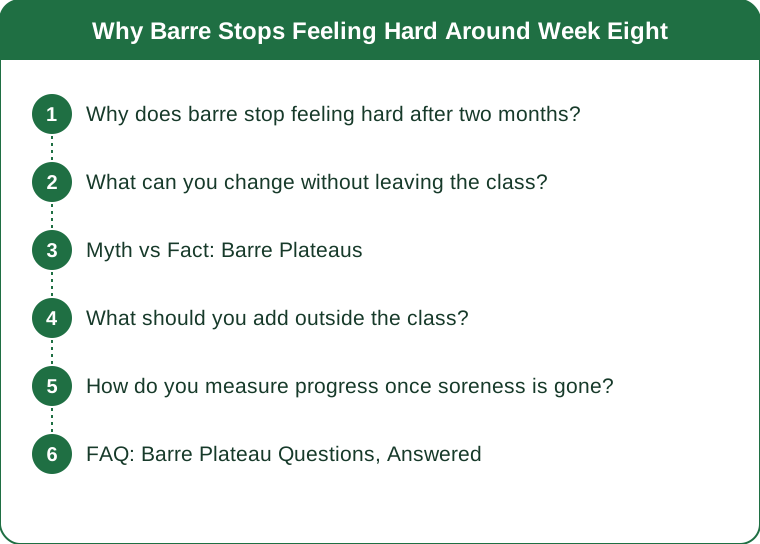
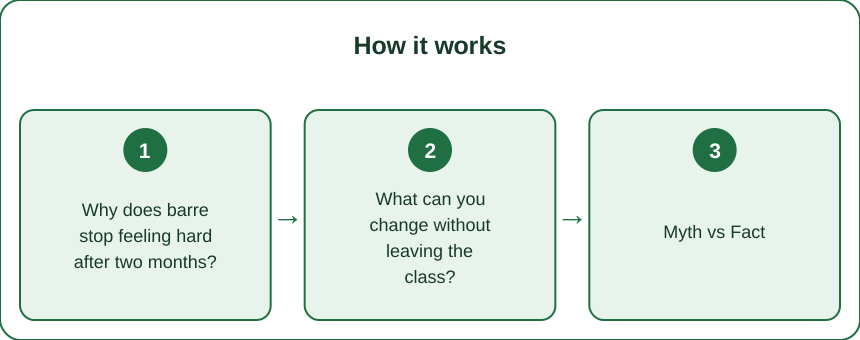
Why does barre stop feeling hard after two months?
Your nervous system got efficient, and efficiency feels like ease. Early on, an unfamiliar movement recruits far more muscle than the task needs, because coordination is poor. As coordination improves, the same movement uses fewer motor units - so it feels easier while producing less stimulus.
The shaking stops for the same reason. That tremor is largely motor units firing out of sync as they fatigue in an unfamiliar isometric hold. Better coordination means smoother recruitment and less visible shake, which is a sign of adaptation rather than a sign of not trying.
Soreness stops early and stops permanently. The repeated bout effect means a muscle exposed to the same eccentric work becomes markedly resistant to soreness within a few sessions. Soreness was never a good measure of progress, and by week eight it has stopped being available as one at all.
Bodyweight load is fixed and your capacity is not. Every other form of training adds weight over time. A barre class holding a two-pound weight in week one is still holding two pounds in week twelve, while your muscles have adapted around it.
And the class is designed to be repeatable. Format consistency is what makes barre teachable and schedulable, and it is also exactly what makes it plateau. That is a design trade-off, not a flaw.
What can you change without leaving the class?
Add load, even small amounts. Moving from two-pound to three-pound weights is a fifty percent increase, and it is the single most effective change available. Most studios have heavier options sitting unused because the class calls out the light ones.
Slow the tempo down deliberately. Doing the pulse section at half speed with full control multiplies time under tension without changing the choreography. It is harder, it is quieter, and nobody in the room will notice you doing it.
Reduce the base of support. Heels together and up, one hand on the barre instead of two, or no hands at all. Every reduction in support increases the stabilising demand substantially, and it is free.
Increase the range before you increase the reps. Sitting lower in a chair position or lifting higher in an arabesque changes the leverage more than adding ten pulses does.
Hold the isometric longer than the count. Staying down for five seconds after the instructor releases turns the end of a set into the hardest part of it - which is where the adaptation lives.
And ask the instructor for the harder variation, because it exists. Most barre teachers hold back progressions to keep a mixed-level room together and will happily give you the advanced option if you ask before class.
Myth vs Fact: Barre Plateaus
Myth: if you are not shaking, you are not working. Fact: the shake is a coordination signal, not an intensity signal. Experienced dancers with excellent control shake far less than beginners and are working considerably harder.
Myth: soreness means the class worked. Fact: soreness reflects novelty and eccentric load, and it disappears within a few exposures to the same stimulus regardless of how effective that stimulus is. Strength gains continue long after soreness stops.
Myth: you need to switch to a harder format. Fact: switching restarts the novelty effect and feels like progress for another six weeks, then plateaus in exactly the same way. Adding load to what you already do is more durable than rotating formats indefinitely.
Myth: barre cannot build real strength because the weights are light. Fact: high-repetition work close to failure does build strength and muscle, but only if it actually approaches failure - and by week eight, a fixed bodyweight class often no longer does.
Myth: more classes per week will fix the plateau. Fact: frequency without added load mostly adds fatigue. Three well-loaded classes outperform five easy ones, and the fifth class is usually where form quality drops.
The pattern: everything people use to judge barre intensity - shaking, soreness, sweat - measures novelty, and novelty is the one thing week eight has run out of.

What should you add outside the class?
One or two sessions of progressive resistance work per week. Barre is excellent at endurance, control, and positional strength, and it is structurally unable to load a squat or a hinge heavily. Adding two compound lifts covers the gap without displacing anything.
Prioritise a hip hinge, because barre almost never trains one. Most barre choreography works in flexion, extension, and abduction with a fairly upright torso. A loaded hinge - a deadlift, a hip thrust, a good morning - trains the posterior chain in a way the class does not.
Add heavier pulling. Barre arm sections are pressing and raising dominant with very light load. Rows and pull-downs balance the shoulder and are hard to replicate with two-pound weights.
Keep the barre classes for what they are genuinely best at - postural endurance, ankle and foot strength, hip control, and an hour of focused practice you will actually attend. The goal is not to replace it.
Deload occasionally rather than escalating forever. A lighter week every six to eight weeks is normal in any training plan and often resolves what looks like a plateau but is actually accumulated fatigue.
And if a plateau comes with unusual fatigue, poor sleep, or joint pain rather than just boredom, treat that as a separate question. Persistent pain in a joint during class is worth a conversation with a physiotherapist rather than a programming change. This is general information, not medical advice.
How do you measure progress once soreness is gone?
Pick two or three positions and time them. A wall sit, a single-leg balance with the eyes closed, and a plank. Test them monthly under the same conditions. These change measurably while class feel does not.
Log the load and the tempo, not the class count. Attendance is a habit metric, not a progress metric. Weight held, seconds under tension, and hands on the barre or not are the numbers that show change.
Watch the hardest thirty seconds of the class. If the final pulse section of the thigh series stopped being genuinely difficult, that is your evidence, and it is more reliable than a general sense of the hour.
Use position quality as a metric. Heels higher, hips lower, ribs stacked, no barre hand. Improvement in these is progress even when the class feels easier, and an instructor can tell you which one to chase.
Photograph or film one position monthly. Positional changes in barre are frequently visible before they are perceptible, and the shift in a arabesque line over eight weeks is often startling in a way the daily experience never is.
And give any change three to four weeks before judging it. Adding a pound of load or a slower tempo will not feel dramatic in session one, which is where most people abandon the adjustment and go looking for a new class instead.
FAQ: Barre Plateau Questions, Answered
Why am I not shaking in barre anymore?
Because your nervous system coordinates the movement better than it did in week one, so motor units fire more smoothly instead of out of sync as they fatigue. Shaking measures unfamiliarity, not effort - experienced dancers shake far less while working considerably harder.
How do I make barre harder without changing classes?
Four levers, all available in your current class: add load (two to three pounds is a fifty percent jump), slow the tempo, reduce the base of support by taking a hand or both hands off the barre, and hold isometrics past the count. Change one at a time and give it three weeks.
Does barre stop working after a few months?
It stops progressing, which is different. Bodyweight load stays fixed while your capacity grows, so the same class delivers less stimulus over time. It continues to maintain postural endurance and control well - it simply needs added load to keep building.
Should I add weight training to barre?
One or two sessions a week covers what barre structurally cannot: a loaded hip hinge and heavier pulling. Barre choreography is mostly upright with light weights, so deadlifts, hip thrusts, and rows complement it rather than duplicating it.
TL;DR:
- The week-eight plateau is neuromuscular efficiency, not the class failing - you recruit less muscle for the same movement.
- Shaking and soreness both measure novelty, so neither survives past the first few weeks regardless of effectiveness.
- Four in-class levers: add load, slow the tempo, reduce the base of support, extend the isometric hold.
- Ask your instructor for the advanced variation; most hold it back to keep a mixed-level room together.
- Add a loaded hip hinge and heavier pulling outside class - barre structurally cannot deliver either.
- Measure timed holds, load, and position quality monthly instead of relying on how the hour felt.
Getting good at barre is what made it feel easy. Load it. This is general information, not medical advice.
See It in Motion
Seen here: Crewneck Short Sleeve Workout T-Shirt — shop it on bubblelime.com
Keep Reading
This article is for general informational and styling purposes only. Fit, sizing, and product availability may vary.