Prenatal Barre: What to Modify and What to Skip Each Trimester

Quick Answer: Barre can generally stay in your routine throughout a healthy pregnancy with modifications, but what needs to change shifts each trimester — mainly around lying flat, deep twists, and balance work as your center of gravity changes. Always get your doctor’s clearance first, especially if you’re new to barre.
You’ve done barre for years and don’t want to give it up just because you’re pregnant. The good news is you probably don’t have to — you just need a trimester-by-trimester playbook instead of your old routine on autopilot.

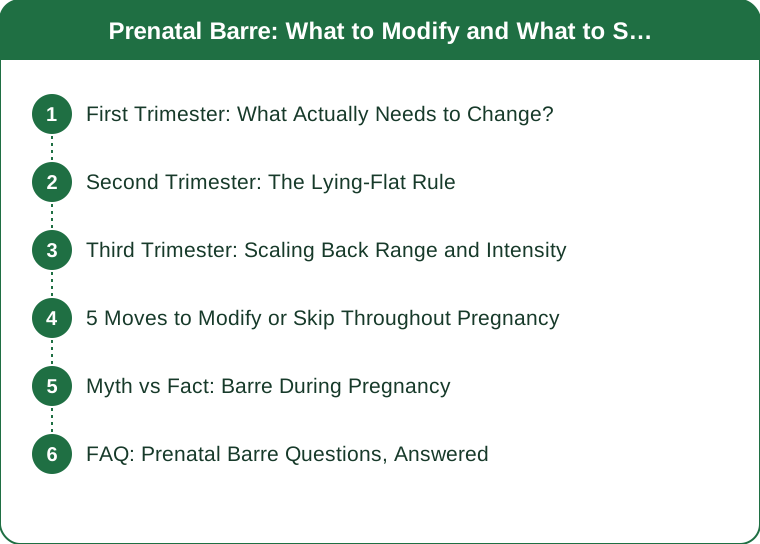
First Trimester: What Actually Needs to Change?
Physically, very little changes in the first trimester for most healthy pregnancies, since your center of gravity hasn’t shifted yet. The bigger factor is often fatigue and nausea, which may mean modifying intensity or timing of class rather than specific movements.
Deep twisting movements are worth easing back on from the start as a general precaution, even though the visible bump hasn’t arrived yet — this sets the habit early rather than needing to relearn it later. This is also a good time to let your instructor know you are pregnant, even before it is visible, so they can start flagging modifications during class rather than you having to remember them all yourself.
Second Trimester: The Lying-Flat Rule
By the second trimester, most guidance recommends avoiding extended time lying flat on your back, since the growing uterus can compress a major blood vessel in that position and reduce blood flow. Any barre moves done supine should shift to an incline (propped on a wedge or pillows) or a side-lying variation instead.
This is also when balance work at the barre needs closer attention — your shifting center of gravity changes your stability in ways that can surprise you mid-move, so staying near the barre for support becomes more important.
Third Trimester: Scaling Back Range and Intensity
In the third trimester, deep pulses and full range-of-motion squats often need to shorten as your joints loosen (thanks to the hormone relaxin) and balance becomes less predictable. This isn’t about doing less effort, it’s about protecting joints that are naturally more mobile and less stable right now.
Many instructors recommend keeping a hand on the barre or a chair throughout most of class by this stage, even for movements you used to do unsupported. Listening to your body over the clock matters more here than in any other trimester, since energy and comfort levels can shift day to day even within the same week.

5 Moves to Modify or Skip Throughout Pregnancy
- Extended flat-back-lying core work — shift to incline or side-lying versions from the second trimester on
- Deep twisting movements — reduce range throughout, especially in later trimesters
- High-impact jumps or plyometric barre sequences — swap for low-impact pulses
- Unsupported single-leg balance holds — stay near the barre for support as pregnancy progresses
- Very deep, prolonged stretches — relaxin loosens joints, so ease off on end-range stretching intensity
A good general rule across all of these: if a movement ever produces sharp pain, pelvic pressure, or dizziness, stop immediately regardless of trimester, rather than trying to push through to finish the set.
Myth vs Fact: Barre During Pregnancy
Myth: You should stop all exercise once you’re visibly pregnant. Fact: For most healthy pregnancies, staying active — including modified barre — is generally encouraged, not discouraged, with your doctor’s clearance.
Myth: Core work is completely off-limits during pregnancy. Fact: Core work isn’t banned, it just shifts format — away from flat-back crunching movements and toward standing or incline-based core engagement that supports rather than strains.
FAQ: Prenatal Barre Questions, Answered
Can I start barre for the first time while pregnant?
Starting a brand-new, more intense exercise routine during pregnancy is generally not recommended without doctor guidance — if you’re new to barre specifically, ease in gently and consider a prenatal-specific class.
Do I need a certified prenatal barre instructor?
It’s not strictly required, but an instructor trained in prenatal modifications will catch adjustments you might miss on your own, especially as your pregnancy progresses.
When should I stop barre entirely during pregnancy?
Most healthy pregnancies can continue modified movement until delivery, but any bleeding, dizziness, contractions, or doctor-flagged concerns mean stopping and checking in immediately.
Will modified barre still give me a real workout during pregnancy?
Yes — modified doesn’t mean ineffective, it means appropriately scaled; many pregnant students still build meaningful strength and endurance throughout pregnancy with a properly adapted routine.
TL;DR:
- First trimester needs the fewest physical modifications; ease off deep twists early as a habit
- Second trimester means avoiding extended flat-back lying and staying close to the barre for balance
- Third trimester calls for shortened range of motion and more supported positions throughout class
- Always get doctor clearance first, especially if barre is new to you
This is general information, not medical advice — check with your OB or midwife before starting or continuing barre during pregnancy.
See It in Motion
Seen here: Maternity Capris with Side Pockets — shop it on bubblelime.com
Keep Reading
This article is for general informational and styling purposes only. Fit, sizing, and product availability may vary.