How Long Does It Take to See Barre Results? A Realistic Timeline

Quick Answer: With two to three classes a week, expect neuromuscular changes in weeks one to three - better balance, less shaking, faster recovery between classes. Endurance and postural changes show up around weeks four to eight. Visible body composition change, if it comes, generally takes twelve weeks or more and depends heavily on nutrition and total activity, not on barre alone. The plateau most people quit at falls right around week six, which is after the easy gains and just before the durable ones.
Three weeks in, everything feels easier and nothing looks different. Both of those are exactly on schedule.

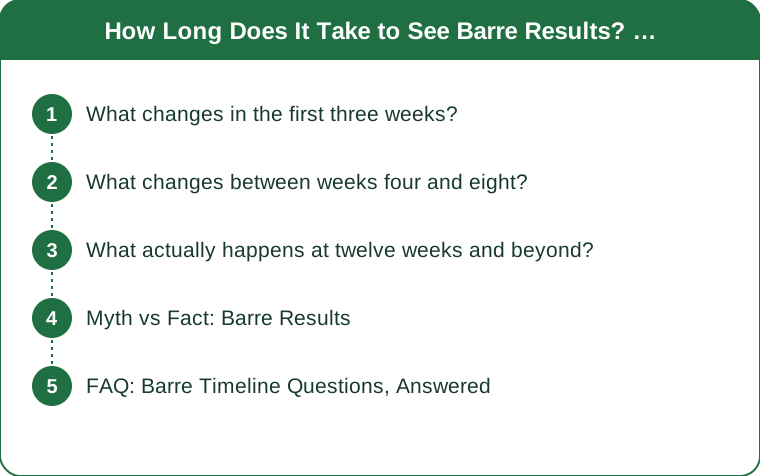
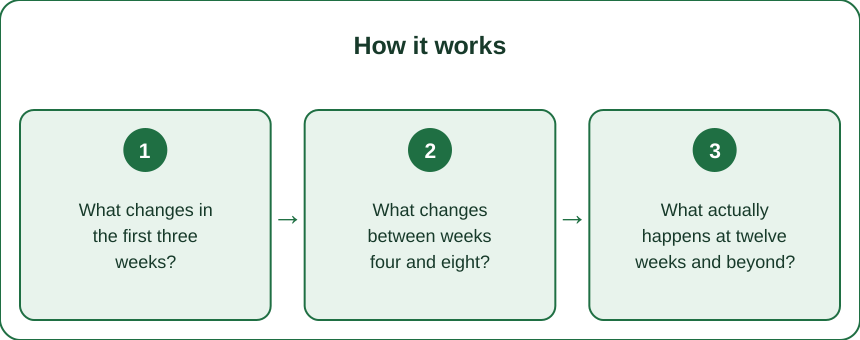
What changes in the first three weeks?
Almost all of it is neural, and almost none of it is muscular. Early strength gains in any new training modality come predominantly from improved motor unit recruitment and coordination rather than from added muscle tissue, and barre is no exception.
The shaking reduces, and this is the most noticeable early change. The tremor in a first barre class is largely a coordination phenomenon - unfamiliar isometric holds at unfamiliar joint angles, with the nervous system firing inefficiently. Within six to eight classes it drops substantially, which people often read as getting fitter but is more precisely getting better at the task.
Balance improves quickly and genuinely. Barre involves a lot of single-leg and narrow-base work, and balance responds fast to frequent practice. This is a real adaptation and it transfers to everyday life more than most gym work does.
Delayed soreness peaks after the first two or three classes and then largely stops. This is normal and is not a sign the classes have become too easy - soreness reflects novelty, and by class four the movements are no longer novel.
What has not changed by week three: muscle size, body composition, and strength in any meaningful load-bearing sense. Expecting those in three weeks is the single most common source of disappointment, and it comes from marketing rather than from physiology.
What changes between weeks four and eight?
Muscular endurance improves markedly, and it is measurable in class. The one-minute hold you could not finish in week two becomes finishable. The second set stops being dramatically worse than the first. This is the period where the work genuinely gets easier at the same difficulty.
Postural change becomes visible to other people before it becomes visible to you. Barre works the deep postural muscles heavily - the ones controlling scapular position, pelvic alignment, and trunk stability - and improvements in those show up as how someone stands and carries themselves. It is a real effect and frequently the first thing anyone comments on.
Hip and glute strength shows up in unrelated activities. Stairs, hills, and getting up from the floor all get noticeably easier around this point, because the smaller hip stabilisers that barre targets are underdeveloped in most people who sit for a living.
Flexibility improves modestly, mostly in the hips and hamstrings. Barre includes a reasonable amount of stretching, and eight weeks of it produces genuine range of motion change, though less than dedicated flexibility work would.
And this is where the plateau feeling starts. The rapid early improvement flattens because the neural gains have largely been collected, and the slower structural adaptations have not yet accumulated. Nothing is wrong. It just feels like nothing is happening, which is why week six is the most common quitting point.

What actually happens at twelve weeks and beyond?
Body composition change becomes possible but is not guaranteed by attendance. A barre class typically burns modest calories compared to running or high-intensity work, so visible change over twelve weeks depends substantially on total daily activity and on nutrition. Attending three classes a week while everything else stays constant produces less change than people expect.
Strength continues to improve but hits a ceiling determined by load. Barre uses bodyweight, light weights, and bands, and those provide enough stimulus to build strength in previously untrained muscles but not enough to keep building indefinitely. After roughly three to six months, most people need to add either heavier resistance work or a progression within the class to keep advancing.
Muscle tone - the visual quality people usually mean - is a combination of some muscle development and lower body fat. Barre contributes to the first and only modestly to the second, which is why the results people show are almost always accompanied by dietary change they mention briefly or not at all.
The genuinely durable outcomes at twelve weeks are postural, functional, and about consistency. Better balance, stronger hips, better trunk control, and a habit that has survived three months. Those are worth more over ten years than a twelve-week photograph.
And a realistic frequency note: two classes a week maintains and slowly improves; three to four produces the timeline above; more than four adds relatively little for barre specifically and would be better spent adding a different stimulus, such as walking or resistance training.
Myth vs Fact: Barre Results
Myth: barre lengthens muscles. Fact: muscle length is determined by the origin and insertion points on your bones and does not change with training. What changes is muscle tone, fascia and connective tissue extensibility, and posture, and posture is doing most of the work in the long-and-lean appearance.
Myth: the shaking means it is working. Fact: shaking mostly means the task is neurologically unfamiliar and the muscle is being held isometrically near fatigue. It reduces as you improve while the training effect continues, so it is a novelty signal rather than an effectiveness signal.
Myth: barre alone will change your body composition. Fact: energy expenditure per class is moderate, and body composition is driven primarily by overall energy balance across the week. Barre contributes, and it contributes more when combined with walking volume and adequate protein than when treated as the entire plan.
Myth: you will see results in two weeks. Fact: you will feel results in two weeks - better balance, less shaking, easier holds. Visible change generally takes twelve weeks or more, and marketing that promises otherwise is describing the neural phase and letting you assume it is the visual one.
Myth: more classes equals faster results. Fact, and this is the one that costs people the most: past three or four classes a week, barre delivers diminishing returns because it does not progressively overload the way resistance training does. The fifth class produces less than a walk plus adequate sleep would, and it makes burnout considerably more likely.
FAQ: Barre Timeline Questions, Answered
How many barre classes a week to see results?
Three is the practical sweet spot for most people. Two maintains and slowly improves; three to four produces the standard timeline of neural change in weeks one to three, endurance and posture in weeks four to eight, and possible visible change from twelve weeks. Beyond four, returns diminish sharply.
Why do I shake so much in barre class?
Because sustained isometric holds at unfamiliar joint angles cause inefficient motor unit firing, and the tremor is the visible result. It reduces significantly within six to eight classes as coordination improves, which is a sign of progress rather than of the class becoming less effective.
Does barre count as strength training?
It builds strength in previously untrained stabilising muscles and provides a genuine stimulus for beginners, but the loads available cap how far that goes. After three to six months, most people need heavier resistance work alongside it to keep progressing in strength specifically.
Will barre help me lose weight?
It contributes modestly. Calorie expenditure per class is moderate compared with running or interval work, so weight change depends far more on overall energy balance, total daily movement, and nutrition. Barre works best as part of a week that also includes walking volume and adequate protein rather than as the whole plan.
TL;DR:
- Weeks 1 to 3: neural change only - less shaking, better balance, faster recovery. Nothing visible, and that is on schedule.
- Weeks 4 to 8: endurance improves noticeably, posture changes enough that other people comment, and hip strength shows up on stairs and hills.
- Week 6 is where the plateau feeling arrives, right between the fast neural gains and the slow structural ones. It is the most common quitting point and the worst time to quit.
- Twelve weeks and beyond: visible body composition change becomes possible but depends heavily on nutrition and total activity, not on class attendance alone.
- Three classes a week is the sweet spot; past four, returns diminish because barre does not progressively overload the way resistance training does.
- The durable wins are postural, functional, and habitual, and they outlast any twelve-week photograph.
At three weeks you will feel different and look the same. Both are correct.
See It in Motion
Seen here: High Waist 8” Yoga Shorts — shop similar styles on bubblelime.com
Keep Reading
This article is for general informational and styling purposes only. Fit, sizing, and product availability may vary.