Why Your Thighs Shake in Barre and Why That Is Often Good

Quick Answer: Thigh shaking in barre usually means the muscle is working hard under sustained, small movements and is running low on steady fuel. It is a sign of fatigue, not damage. Keep your alignment tight, use smaller ranges if the shake turns into pain, and rest between sets. Sharp pain or joint discomfort means stop and check your form.
You are holding a tiny pulse at the barre, and suddenly your thighs start trembling. Your instructor says to stay with it, but you wonder if something is wrong. Nothing is broken. Barre keeps muscles working in a narrow range for a long time, and that style of effort is exactly what makes them shake.
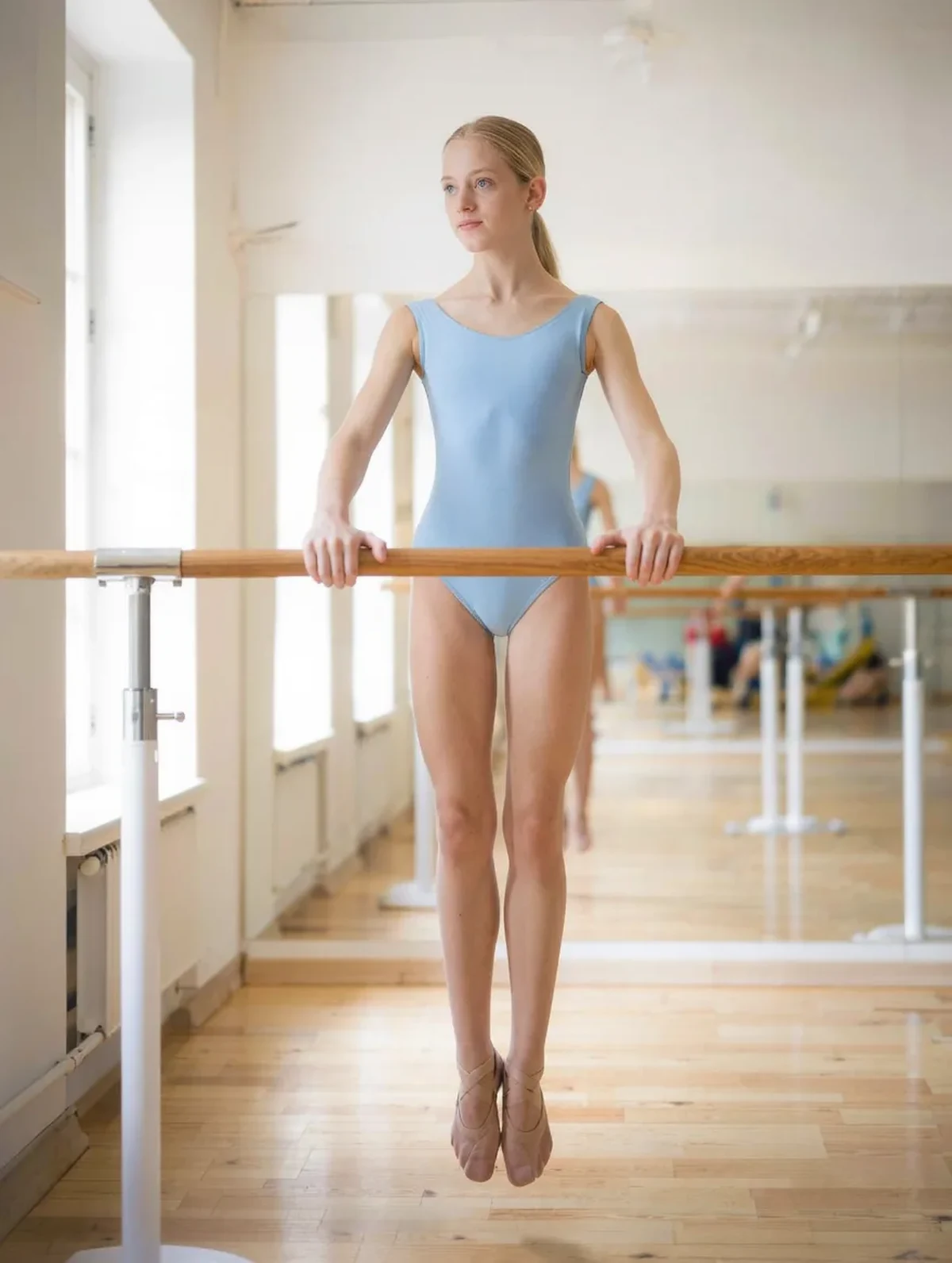
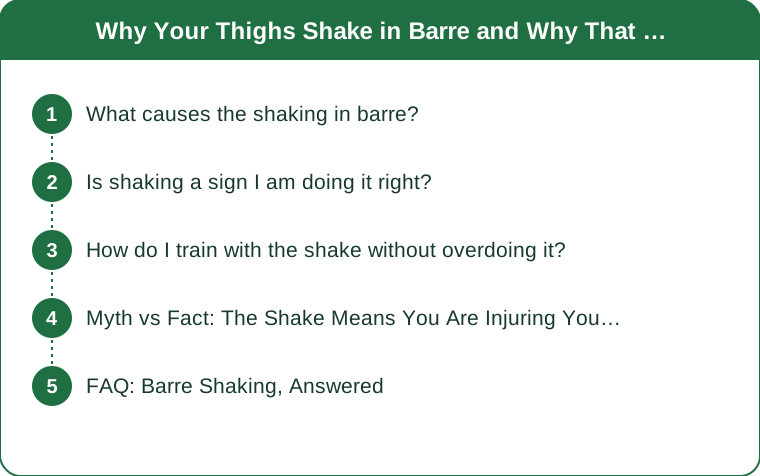
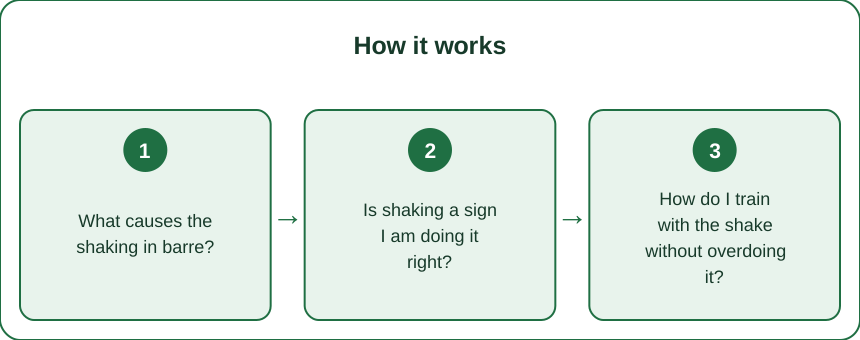
What causes the shaking in barre?
Barre uses small, repeated contractions held under tension. Those muscles, mainly the quads, glutes, and inner thighs, fatigue before your breathing or heart rate catches up. When a fatigued muscle keeps firing, the fibers switch on and off unevenly, and you feel that as a tremor.
It is the same reason your arms shake at the end of a long plank. The muscle is doing its job while it runs low on the energy it needs for steady work.
Is shaking a sign I am doing it right?
Partly. A little shaking means you are challenging the target muscle. But shaking alone does not prove good form. You can shake a lot with your hips rolling or your knees collapsing inward.
Use two checks. Keep your hips level and your knees tracking over your toes. Then ask whether the work feels like burn and tremor in the muscle, or like a pinch in a joint. The first is fatigue. The second means change something.
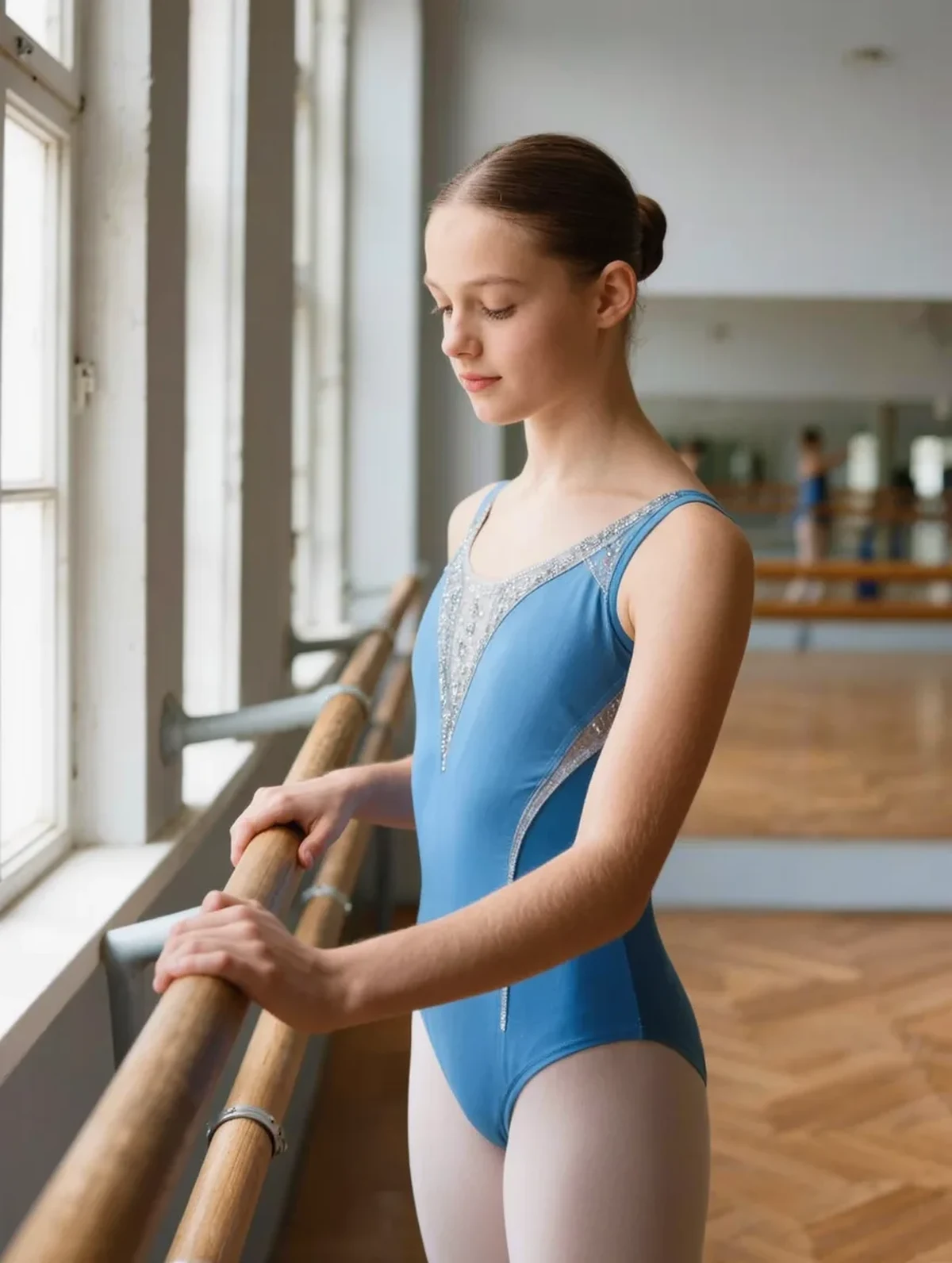
How do I train with the shake without overdoing it?
Try three small changes. Shorten your range by a few inches on the pulses. Take a five-second rest between sets of eight. Lower the number of reps in a set when the shake starts to affect your balance.
Over several weeks, most people find the shake shows up later in the set. That is a clear signal that your endurance is improving, not that the class is getting harder for no reason.
Myth vs Fact: The Shake Means You Are Injuring Yourself
Myth: If your legs shake, you are damaging your muscles.
Fact: Shaking is fatigue. Pain in a joint, sharp pain, or a feeling of instability is different and deserves a break. Pay attention to which one you feel.
FAQ: Barre Shaking, Answered
Should I push through the shake until class ends?
Push through the working part of the set, but stop a movement if your form breaks down or you feel joint pain.
Why do the shakes happen more on some days?
Sleep, hydration, and how much you have trained that week all change how fatigued your muscles get. A heavy day at the gym can make barre shakes show up earlier.
When should I talk to a professional?
If you feel sharp or lasting pain in the hip, knee, or lower back, or the shake comes with numbness, see a physical therapist or doctor. This is general information, not medical advice.
TL;DR:
- Thigh shaking in barre is muscle fatigue from small, held contractions.
- Good form keeps the shake in the muscle, not the joint.
- Shorter ranges, brief rests, and fewer reps help you train without overdoing it.
- Sharp or lasting joint pain means stop, adjust, and get checked.
See It in Motion
Seen here: UPF 50+ Short Sleeve Rashguard Swim Shirt — shop it on bubblelime.com
Keep Reading
This article is for general informational and styling purposes only. Fit, sizing, and product availability may vary.