What Do All the Barre Props Actually Do? A Beginner's Breakdown
Quick Answer: The small ball adds core and inner-thigh engagement, the resistance band targets seat and outer-hip work, light hand weights isolate arm burnout, and the mat handles floor-based core and stretching segments — each prop targets a different muscle group within the same class format.
Walking into your first few barre classes, the prop rotation can feel like a lot to track. Knowing what each one is actually doing makes the class make a lot more sense.
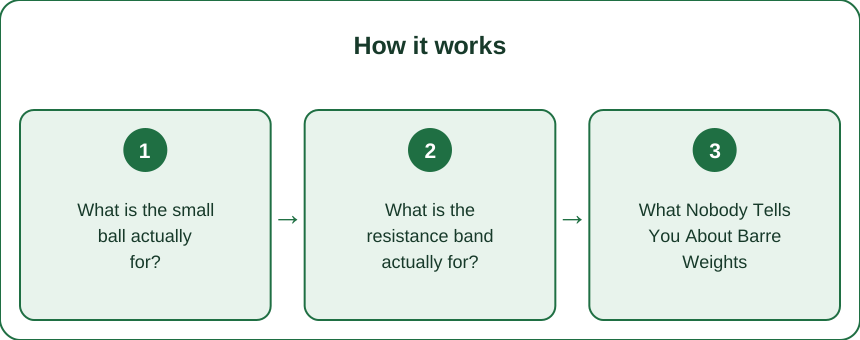
What is the small ball actually for?
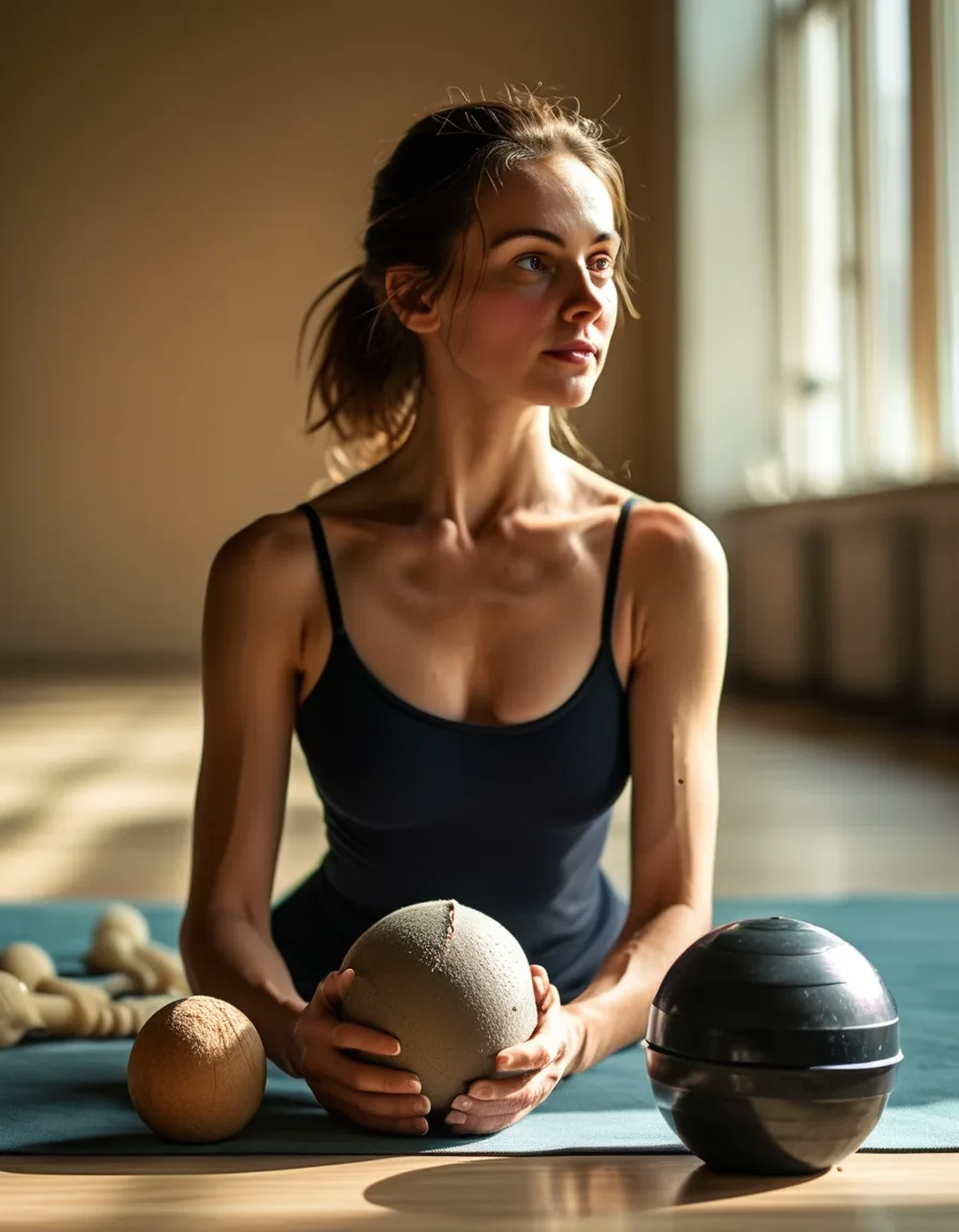
The small Pilates-style ball is used mainly for isometric squeeze work — held between the thighs, knees, or against the wall during a squat hold, it forces continuous inner-thigh and core engagement that a bodyweight-only version of the same move wouldn’t demand.
It’s also frequently used pressed between the hands during core segments, adding upper-body engagement to what would otherwise be a pure ab exercise.
What is the resistance band actually for?
Bands in barre are typically looped around the ankles or thighs during seat-work segments — kickbacks, side leg lifts, clamshells — adding resistance specifically to outer hip and glute medius work that bodyweight alone undertrains.
This is the segment most people describe as the ‘shaking’ part of barre — the band’s constant tension keeps those muscles under near-continuous load through small range-of-motion pulses.
What Nobody Tells You About Barre Weights
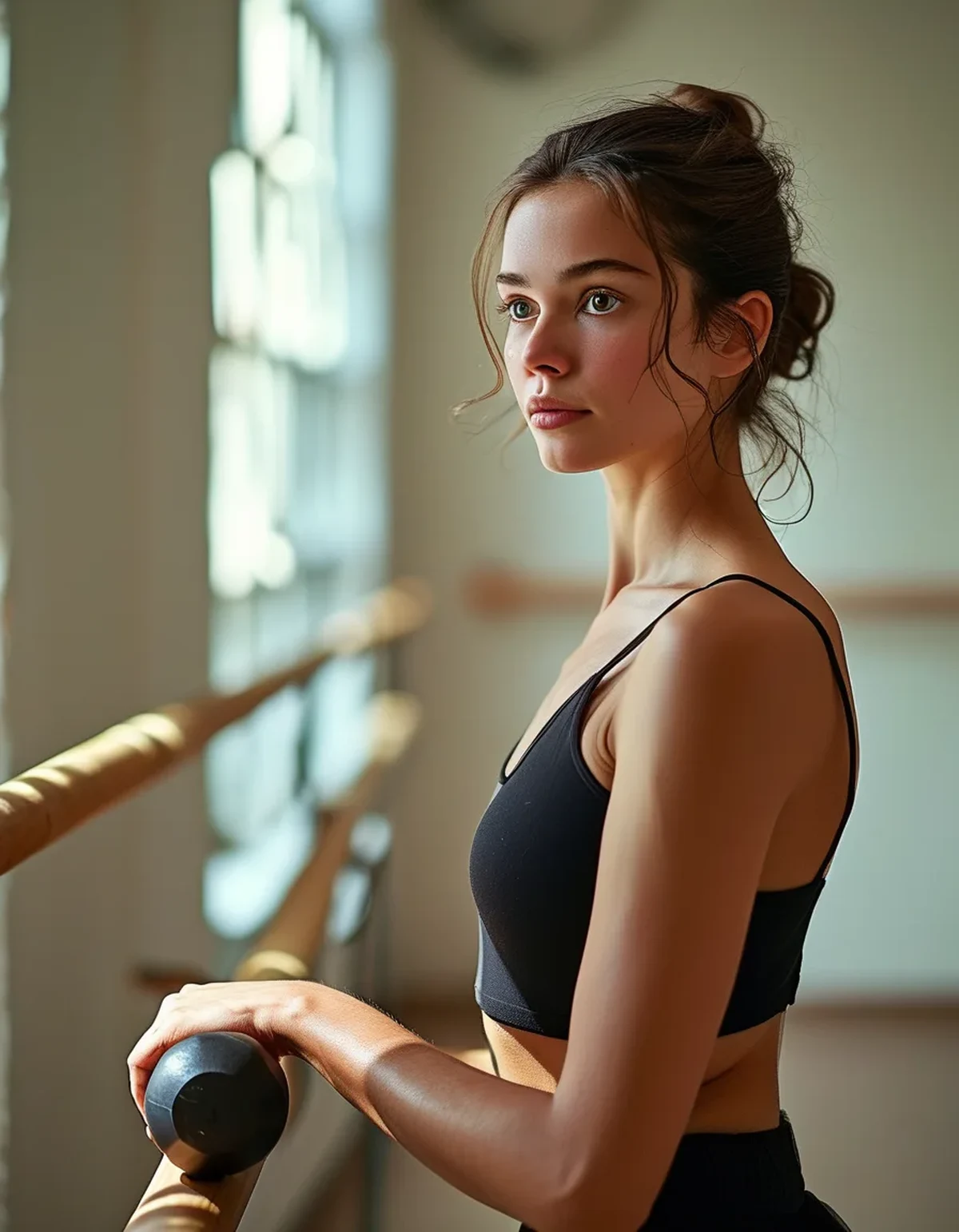
The weights are intentionally light (1-3 lbs) on purpose — barre isn’t training for hypertrophy through heavy load, it’s training for muscular endurance through high-rep, small-range pulses, so heavier weights would actually work against the format’s intended stimulus.
Also underrated: weight placement matters as much as the weight itself — holding weights at specific arm angles (like a bent-elbow ‘chicken wing’ hold) targets different deltoid and tricep fibers than a straight-arm hold with the same weight.
Do you actually need all the props to get results?
No — a bodyweight-only barre class still delivers the core format’s benefits (isometric holds, small-range pulses, posture focus); props add variety and targeted resistance but aren’t the mechanism the format depends on.
If you’re new, focus on form with bodyweight first — adding a ball or band before your form is solid can encourage compensations that undercut the exercise’s actual target.
FAQ: Barre Props Questions, Answered
Why does barre use such light weights compared to strength training?
Barre targets muscular endurance through high-rep, small-range work, which is a different stimulus than the heavier, lower-rep loading used for building maximal strength.
Can I do barre at home without any props?
Yes — bodyweight barre delivers the core benefits; props like a ball, band, or light weights add variety but aren’t required to get a legitimate workout.
What if I don’t have the exact studio props at home?
Household substitutes work fine — a rolled towel for the ball, a long sock or old tights for the band, and canned goods for light weights all approximate the same function.
TL;DR:
- The ball adds isometric core and inner-thigh squeeze work
- The band targets outer hip and glute medius through resistance during seat-work
- Light weights (1-3 lbs) train muscular endurance, not hypertrophy — that’s intentional
- Bodyweight-only barre still delivers the format’s core benefits without any props
Each prop adds a specific layer, but none of them are required to get a real barre workout.
See It in Motion
Seen here: Racerback Tank Top - White — shop similar styles on bubblelime.com
Keep Reading
This article is for general informational and styling purposes only. Fit, sizing, and product availability may vary.