Why Your Grip on the Barre Gets Weaker as the Class Goes On (Not Stronger)

Quick Answer: Grip strength fades during barre because sustained, low-level isometric holds fatigue forearm muscles faster than most exercise, and barre asks for a light-but-constant grip for 45+ minutes straight. A 2-minute forearm reset mid-class, not a tighter grip, is the fix.
You notice it around the second half of class — the barre suddenly feels harder to hold onto, your fingers start to ache, and you’re gripping tighter just to feel secure. Your hands aren’t getting weaker in general. They’re fatiguing in a very specific, very predictable way.
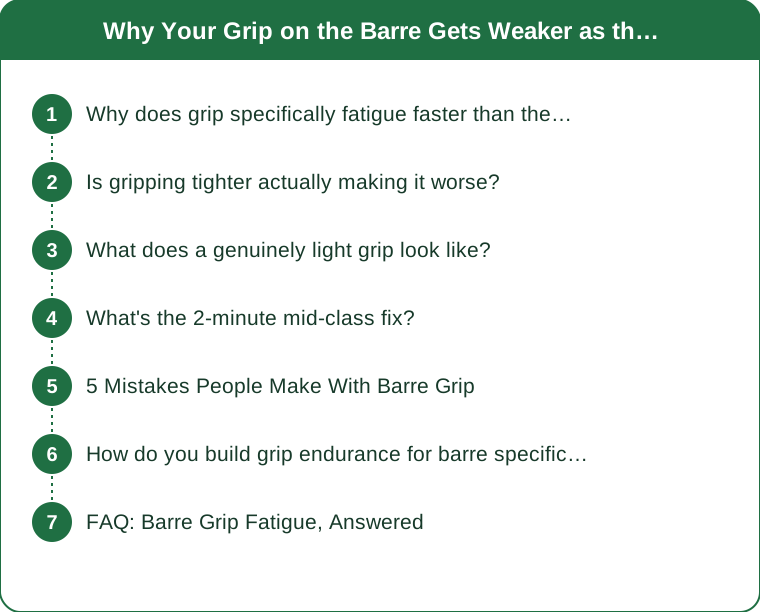
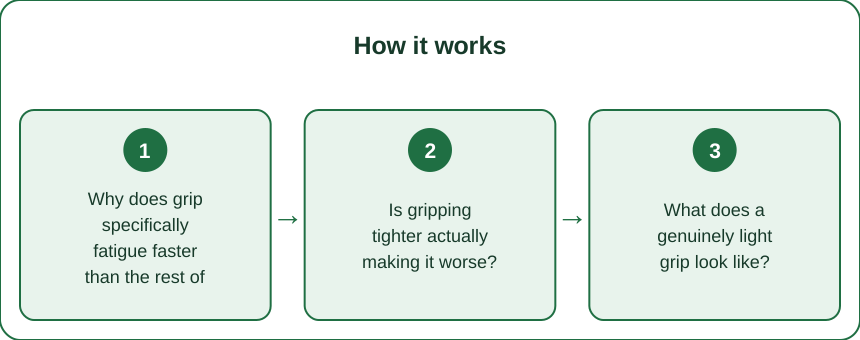
Why does grip specifically fatigue faster than the rest of the body?
Forearm and hand muscles are small relative to the demand barre places on them — a light, sustained isometric hold for 45+ minutes recruits the same small motor units over and over with almost no rest, which is a classic fast-fatigue pattern.
Compare that to your legs, which get brief active rest between combos. Your grip rarely gets that same break, since even ‘resting’ positions in barre usually still involve some contact with the barre.
Is gripping tighter actually making it worse?
Yes, in most cases. A tighter-than-necessary grip recruits more muscle fiber than the hold requires, burning through your forearm’s fatigue-resistant capacity faster — the exact opposite of what feels intuitive when your hands start to ache.
The irony: gripping harder to ‘feel secure’ is often what accelerates the fatigue that makes your grip feel insecure in the first place.
What does a genuinely light grip look like?
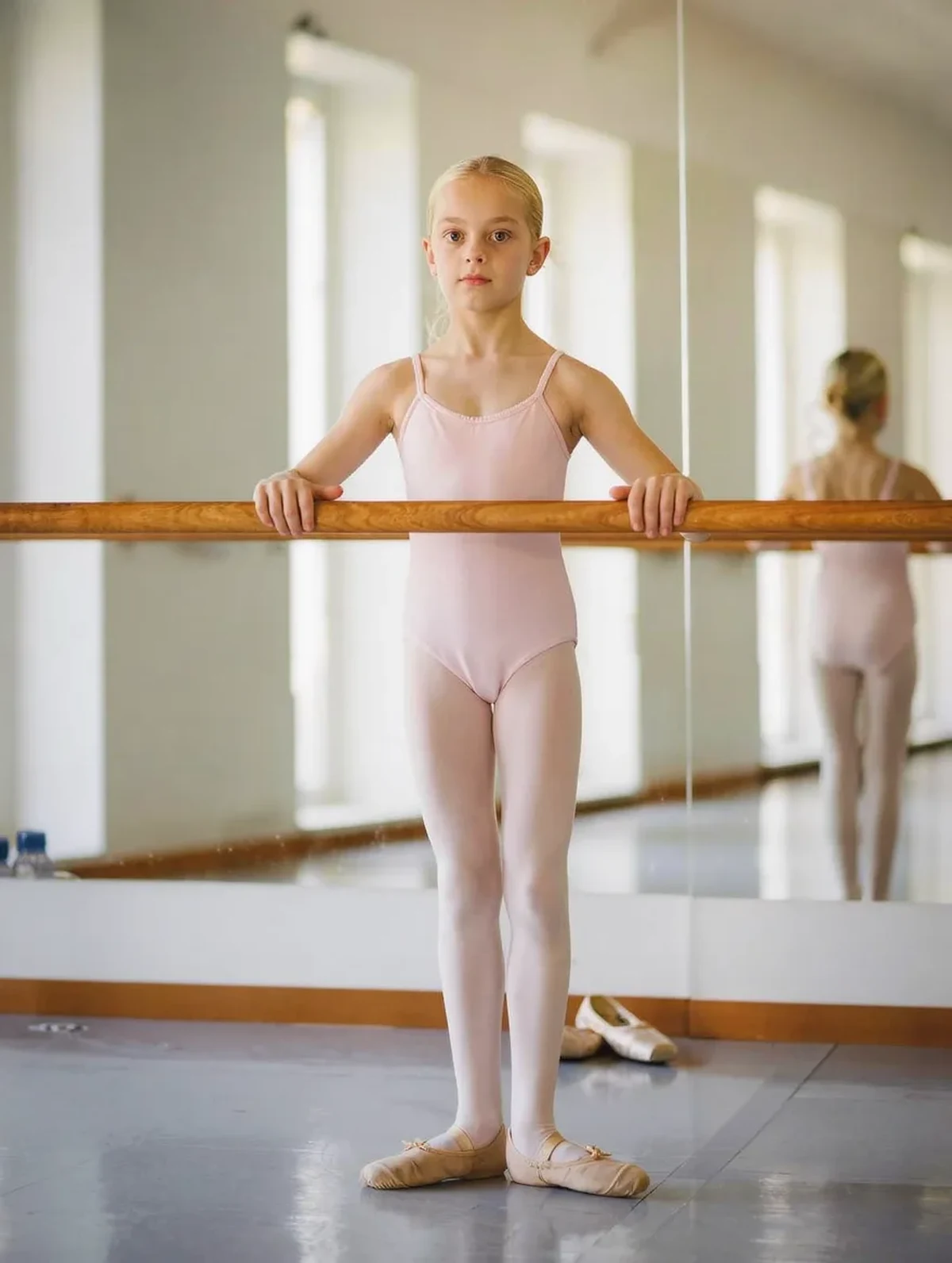
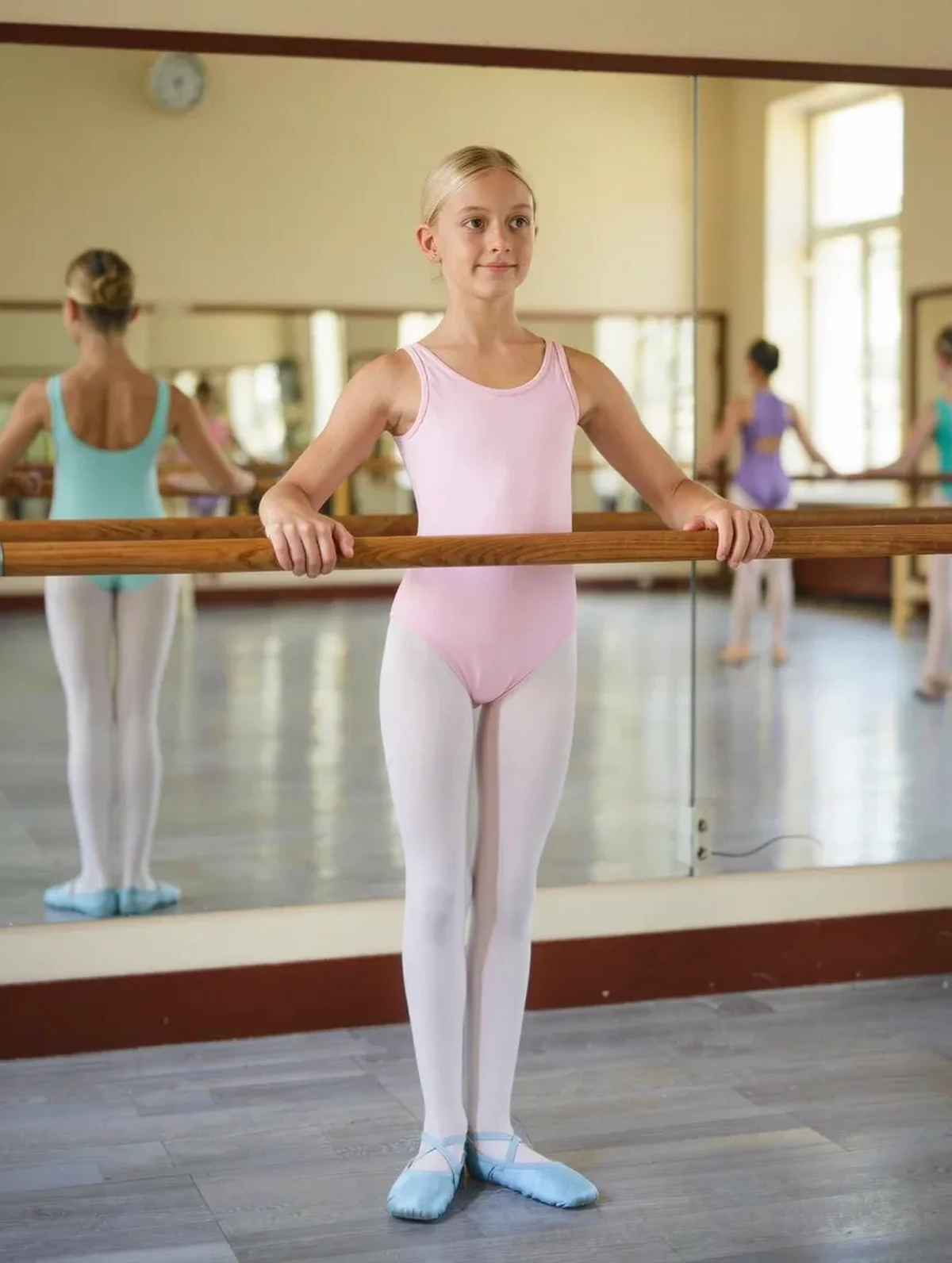
Barre technique cues usually call this a ‘kiss’ or ‘finger touch’ grip — enough contact to sense the barre’s position for balance, not enough to bear real weight through your hands. Most of your stability should come from your standing leg and core, with the barre as a light reference point, not a support beam.
If you could let go of the barre for a second without falling, your grip is doing its job. If letting go would genuinely destabilize you, you’re likely using the barre as a crutch rather than a guide — which both fatigues your grip and undertrains your standing-leg balance.
What’s the 2-minute mid-class fix?
During a combo transition or water break, do 10-15 seconds of open-close hand pumps (spread fingers wide, then make a loose fist, repeated) followed by gently shaking out your hands. This briefly flushes the small forearm muscles and resets some of the fatigue without needing to stop moving for long.
Doing this once around the halfway point of class — rather than waiting until your grip already feels shaky — prevents the fade rather than reacting to it.
5 Mistakes People Make With Barre Grip
1. Gripping harder as fatigue builds — accelerates the exact problem it’s trying to solve.
2. Never checking if they actually need the barre for balance — often the answer is no, and standing-leg strength quietly goes untrained as a result.
3. Ignoring wrist position. A bent wrist under sustained load fatigues faster than a neutral one — check that your wrist stays roughly straight, not cocked upward.
4. Skipping hand resets during breaks. Ten seconds of open-close hand pumps costs nothing and meaningfully delays the fade.
5. Blaming overall fitness for hand fatigue. This is highly specific to isometric grip endurance, which barely overlaps with cardio or leg-strength fitness — improving one doesn’t automatically improve the other.
How do you build grip endurance for barre specifically over time?
Isometric hangs or light static grip holds (even holding a light dumbbell for 30-45 seconds, a few times a week outside of class) build the same fatigue-resistant capacity barre demands. Most people notice their barre-specific grip endurance improve within 3-4 weeks of adding this twice a week.
FAQ: Barre Grip Fatigue, Answered
Is it normal for my forearms to be sore the next day from barre?
Some mild forearm soreness, especially early on, is a normal response to a new isometric demand — it typically fades as your grip endurance builds over a few weeks of consistent classes.
Should I use gloves or chalk for barre grip?
Most people don’t need either — the issue is muscular fatigue, not slipping, so gloves address the wrong problem. If sweat genuinely causes slipping, a small hand towel between combos solves it more simply.
Does grip fatigue mean I’m doing the exercises wrong?
No — it’s an expected physiological response to sustained isometric holding, not a technique error. The fix is managing the fatigue (light grip, mid-class resets), not changing your form.
TL;DR:
- Barre grip fades because sustained light isometric holds fatigue small forearm muscles faster than most exercise
- Gripping tighter as you fatigue usually makes the fade worse, not better
- Use a light ‘kiss’ grip — most stability should come from your standing leg and core
- A 10-second hand-pump reset around the halfway point of class delays the fade noticeably
Your hands aren’t failing you — they’re doing exactly what small, sustained-load muscles do. Manage it lightly and the fade barely shows up.
See It in Motion
Seen here: Crewneck Short Sleeve Workout T-Shirt — shop it on bubblelime.com
Keep Reading
This article is for general informational and styling purposes only. Fit, sizing, and product availability may vary.