The Barre Etiquette Mistakes That Make You Obviously New (And How to Fix Them Fast)

Quick Answer: What marks you as new in a barre class has almost nothing to do with the exercises. It’s procedural: taking a regular’s usual spot, fumbling for props mid-cue, still talking when instruction starts, and pushing through full range instead of modifying. The rules are simple once someone says them out loud — arrive 10 minutes early, grab all your props before class begins, modify without announcing it, and save questions for after. Three classes and you’ll look like you’ve been there for months.
Nobody is judging your plié. Genuinely, nobody.
They did notice that you took Karen’s spot at the barre, and that you went looking for a ball halfway through the thigh section.
Small stuff. Entirely fixable stuff. Stuff nobody ever tells you.
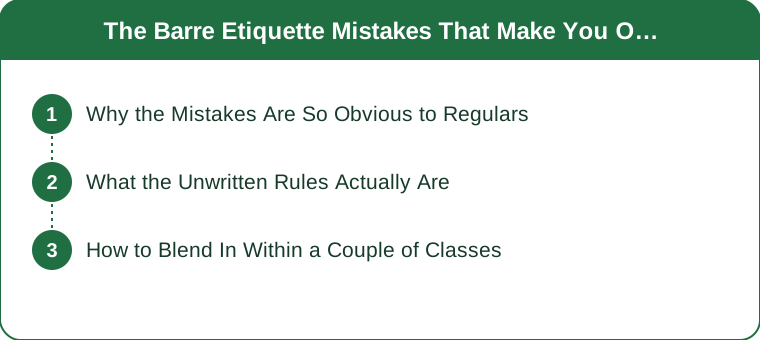
5 Mistakes Everyone Makes in Their First Barre Class
1. Taking a regular’s spot. Barre studios develop deep spot habits — people stand in the same place for years. It’s rarely enforced and nobody will say anything, but it’s the most common source of quiet tension when someone new walks in. If the room is filling up and there’s an obviously empty stretch of barre nobody’s taking at 9:58, there may be a reason. Ask the instructor where a first-timer should stand and the whole issue evaporates.
2. Fumbling for props mid-class. Barre classes move fast through transitions — you go from the barre to the mat to weights with very little pause. Regulars have everything within arm’s reach before class starts. A newcomer discovers they need a ball while the instructor is already cueing, then crosses the room for it. The fix is entirely front-loaded: ask what you’ll need, and have all of it at your spot before the music starts.
3. Still talking when instruction begins. The room goes quiet faster than seems reasonable — usually the instant the instructor takes position, before they’ve said anything. Chatting one beat past that is small and noticeable. Watch for the shift rather than waiting for a cue.
4. Pushing through instead of modifying. The one that’s actually counterproductive. People avoid modifying because they don’t want to stand out, and then visibly shake, drop out of position, or grimace through a full-range version they can’t hold. That draws far more attention than a clean modification would. Instructors expect modifications and think nothing of them.
5. Hovering over the cleanup. Everyone breaks down and returns props in about forty seconds at the end. Not knowing where the balls go is a two-second question, and asking it is completely unremarkable.
None of these are about competence. They’re procedures, and procedures are learnable in a session.

What Are the Unwritten Rules, Exactly?
Arrive about 10 minutes early. This single habit solves spot selection, prop setup, and the chance to ask a question, all at once. It’s the highest-return thing on this list.
Respect the spacing. Barre formation is tighter than most group fitness. People are close, and arm and leg extensions travel further than you’d think. Be aware of your reach range, especially during arm sequences.
Modify quietly, without apologizing. Take the modification and carry on. No announcement, no explanation, no apologetic look at the instructor. Modifications are ordinary and expected.
Save questions for after class. Unless it’s about safety — pain, or being unsure whether something’s damaging — hold non-urgent questions until the end. Barre sequences flow continuously and mid-class questions break the room’s rhythm.
Match the room’s energy. This surprises people coming from other formats. Many barre classes run quiet and internally focused rather than loud and vocal. If nobody’s whooping, don’t be the one whooping.
One clothing note: barre is done barefoot or in grip socks — check which your studio requires — and involves a lot of positions where fabric matters. High waist leggings that stay put through hinges and floor work save you from adjusting your waistband every fourth exercise, which is its own small tell.
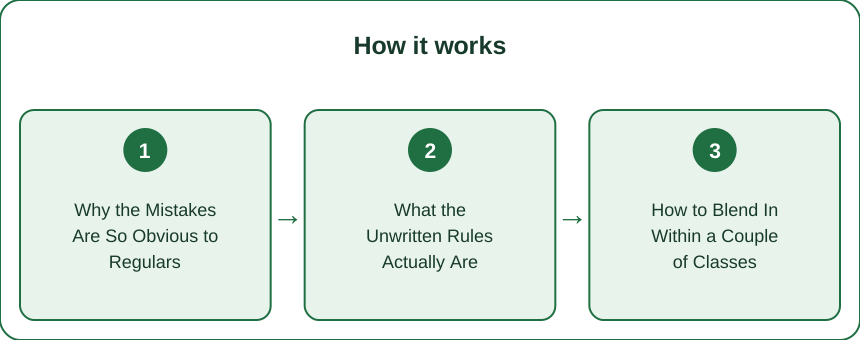
How Do I Blend In Fast?
Ask the instructor one question before your first class. “I’m new — where should I set up and what props will I need?” This gets you the specific local norms in ten seconds and signals that you’re paying attention. Instructors genuinely like this question.
Mirror the regulars. Watch how experienced attendees set up and transition. It’s free, requires no interaction, and teaches you the routine faster than any explanation.
Skip the over-apologizing. A few beginner-standard confusions are completely expected. Apologizing repeatedly for them draws more attention than the original moment did and makes everyone slightly uncomfortable. Quiet confidence reads much better than repeated sorries.
Go to the same class time. Attending the same slot builds familiarity with the room’s culture and the same faces much faster than rotating between different classes and instructors.
Give it three classes. Etiquette absorption takes a few sessions, exactly the way the exercises do. Class one will feel awkward. Class three usually doesn’t.
Mini FAQ
What should I wear to my first barre class?
Fitted leggings or capris — loose pants make it hard for the instructor to see your alignment — a top that stays put when you bend forward, and grip socks. Most studios sell grip socks at the desk if you forget.
Is it rude to leave before the cool-down?
It’s noticeable, and worth mentioning to the instructor beforehand if you know you have to. Then leave quietly during a transition rather than mid-sequence.
What if I genuinely can’t do something?
Rest. Standing and breathing for thirty seconds is a completely normal thing to do in a barre class, and it’s a much better call than pushing into a position that hurts. Tell the instructor after if something specific caused pain — that’s information they want.
TL;DR:
- What marks you as new is procedural, not physical — spot, props, timing, cleanup.
- Arrive 10 minutes early; it solves most etiquette problems at once.
- Set up every prop before class starts — barre transitions move too fast to go hunting.
- Modify without announcing or apologizing; instructors expect it.
- Ask one setup question upfront, return to the same class time, and give it three classes.
See It in Motion
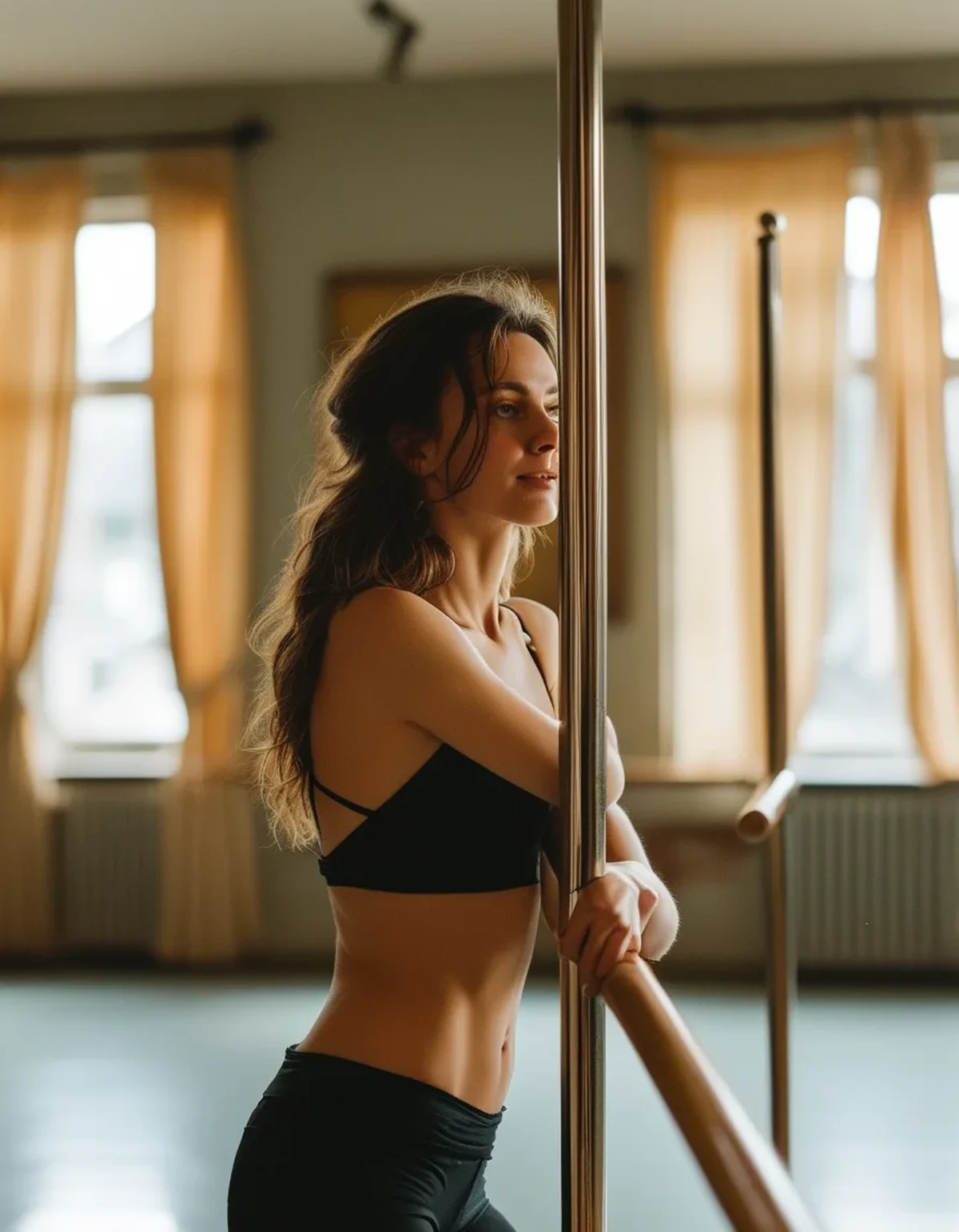
Seen here: Bootcut Capri Yoga Pants with Pockets — shop similar styles on bubblelime.com
Keep Reading
This article is for general informational and styling purposes only. Fit, sizing, and product availability may vary.