What Actually Changes When You Move Barre From the Studio to Your Living Room

Quick Answer: The barre is the least important thing you lose — a sturdy chair back or a countertop works fine. What you actually lose is external tempo, positional correction, and the social contract that keeps you in a hold when it burns. Rebuild those three deliberately: follow a class with audio cues rather than freestyling, film yourself once a month, and commit to a fixed time with someone expecting you.
Everyone assumes the hard part of home barre is not having a barre.
It isn’t. The hard part is that a studio class holds you at the bottom of a plié for eight counts longer than you’d choose, and your living room never will.
Do you actually need a barre?
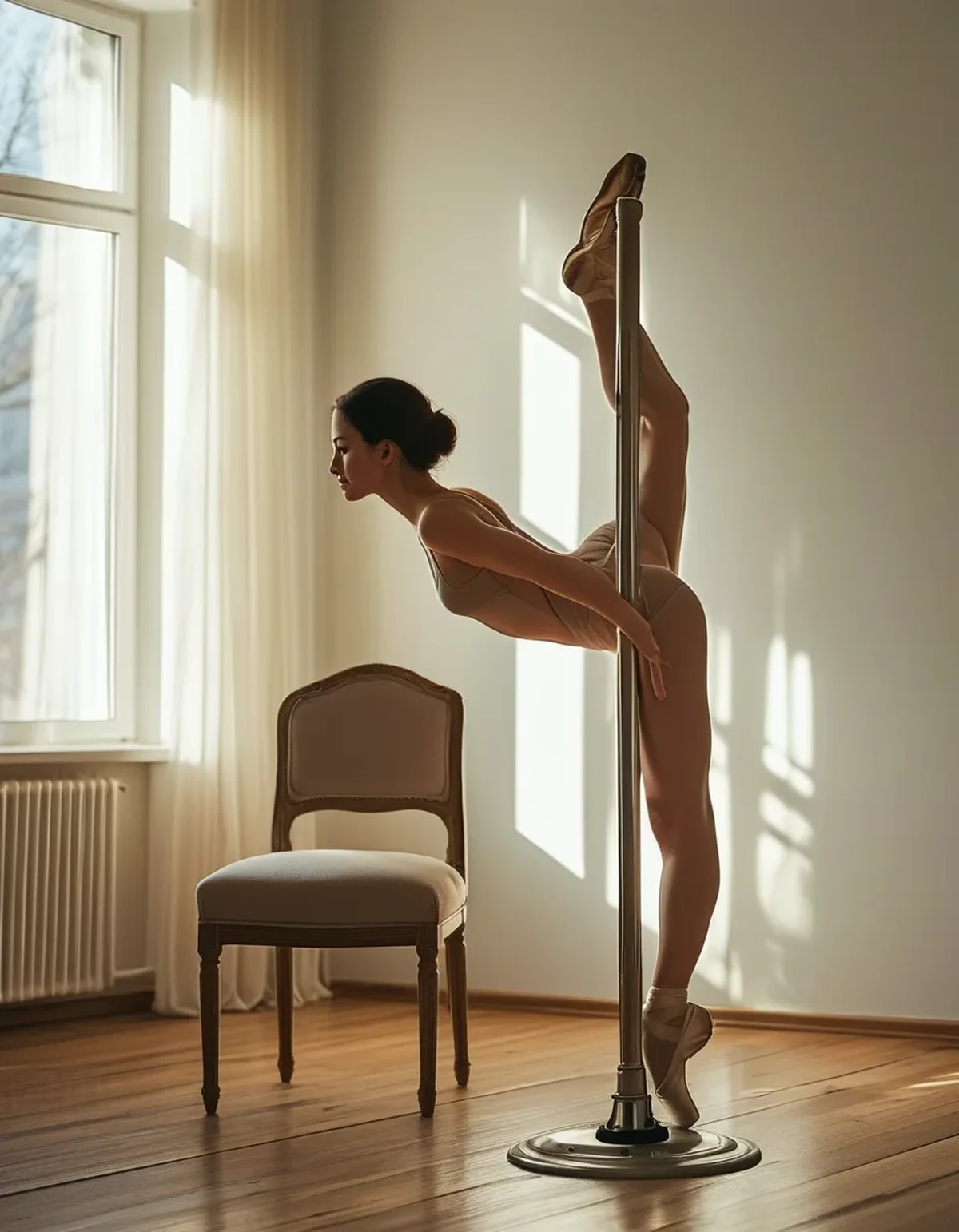
No, and this is the easiest problem on the list.
What a barre provides is a stable support at roughly hip height that lets you place a light hand for balance without leaning. That’s it. It isn’t a load-bearing device and you shouldn’t be gripping it hard in the first place — instructors spend a lot of time telling people to stop white-knuckling it.
Working substitutes, in order of preference:
- A countertop or a sturdy table edge. Right height for most people, completely stable.
- The back of a heavy dining chair, ideally against a wall so it can’t slide.
- A windowsill at the right height.
- A wall. For a lot of exercises, fingertips on a wall is genuinely enough, and it’s better than a chair because it forces you not to lean.
What doesn’t work: anything that moves. A light chair on a hardwood floor will slide at the worst moment, and an office chair is an accident waiting to happen.
The more useful equipment purchases are elsewhere: a mat, a small ball, a light resistance band, and light hand weights in the 1 to 3 pound range. That’s the whole kit and it fits in a basket.
What do you lose when nobody is counting?
Tempo, and it’s the biggest loss by a distance.
A barre class works largely through time under tension — small-range movements held and pulsed until the muscle genuinely fatigues. The burn at the end of a thigh section isn’t incidental; it is the stimulus.
Left to yourself, you will come out of that hold early. Everyone does. Not from laziness — from an entirely reasonable response to discomfort with no external reason to stay. The difference between a studio set and a self-directed one is frequently 20 to 30 percent fewer reps at the exact point where the work was happening.
What replaces it:
- Follow a recorded class with a real instructor counting. This is the single most important thing. An instructor’s voice counting down from eight is doing the job the studio was doing.
- If you freestyle, use a timer, and set it before you start the set rather than deciding as you go.
- Count out loud. Sounds silly, works. It externalizes the count and makes stopping early a decision you have to actively make.
The reason home barre routines fade isn’t boredom. It’s that they get progressively easier without anyone noticing, until they stop producing anything.
How do you fix form without an instructor walking past?
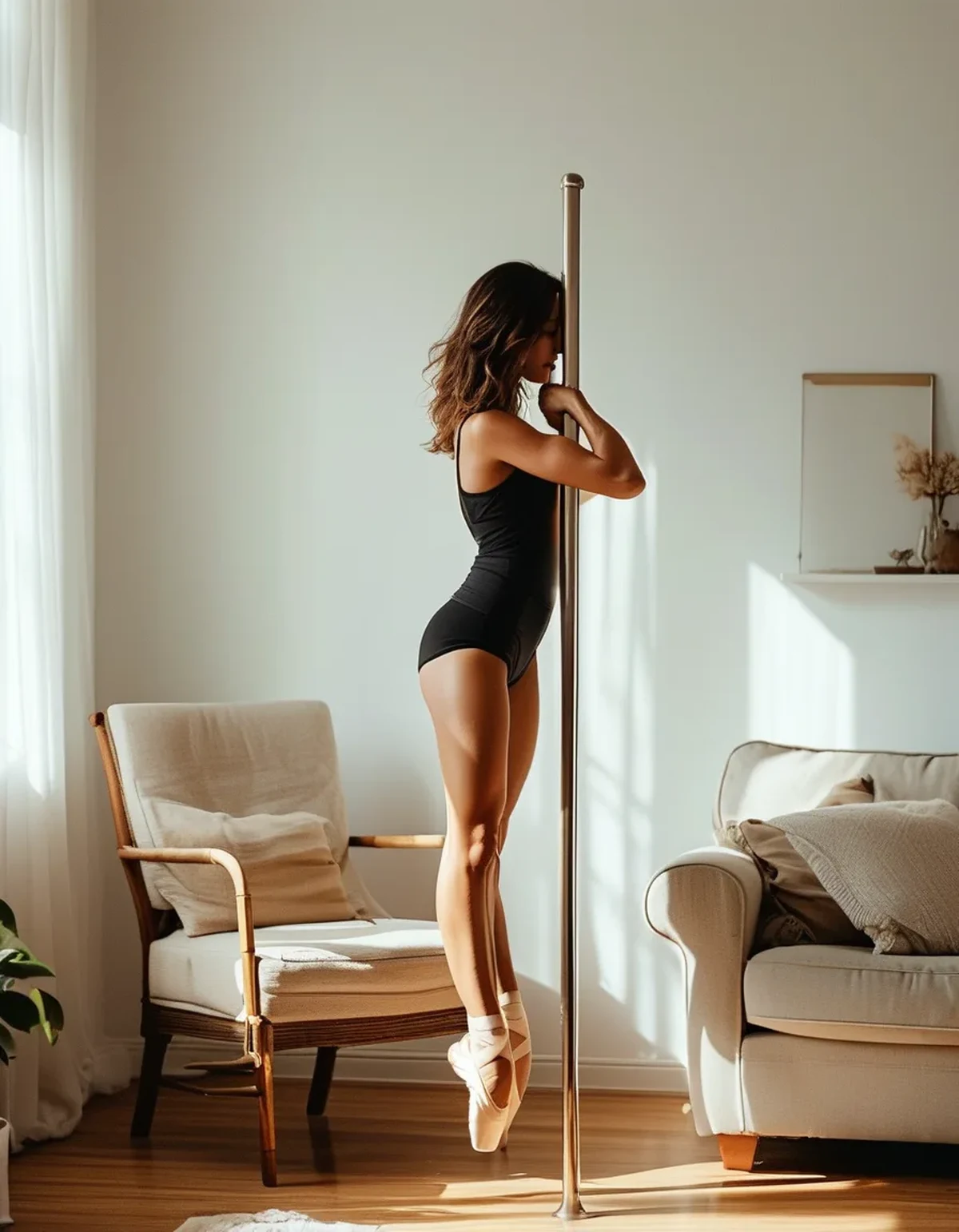
The three corrections instructors make most are all self-checkable if you know to look for them.
1. Ribs. The single most common correction in barre. In almost every standing exercise the ribcage drifts up and forward, arching the lower back, and the abdominal work disappears. Self-check: stand side-on to a mirror and see if your lower ribs are flared. The cue is to draw them down slightly without tucking your pelvis hard.
2. Shoulders. They creep toward the ears during arm work, especially with light weights held for a long time. Self-check: every 20 seconds during an arm section, consciously drop them. If they’d crept, they had crept.
3. Pelvis. Barre involves a lot of pelvic tuck cues, and people massively overdo them at home, gripping the glutes and flattening the lower back into a position that irritates rather than strengthens. Self-check: the tuck should be a small movement you could hold while breathing normally. If you’re holding your breath, it’s too much.
The tool that fixes all three: film one class a month from the side with your phone propped on a shelf. Watch it at double speed. You’ll see in ninety seconds what you couldn’t feel in an hour, and the difference between home practitioners who progress and those who plateau is almost entirely this.
5 Mistakes Everyone Makes With Home Barre
1. Freestyling from memory. You’ll reproduce the exercises you like and drop the ones that were hard, which are the ones that were working. Follow a class.
2. Using heavier weights to compensate. Barre arm sections use 2 to 3 pound weights for a reason — the stimulus is duration, not load. Switching to 8 pounds changes the exercise into something else and usually recruits the wrong muscles entirely.
3. Skipping the warm-up because you’re at home and short on time. The warm-up in barre isn’t ceremonial; the class moves into deep hip and thigh positions fast, and cold adductors and hip flexors are how people tweak something.
4. Practicing on carpet. Balance work and precise foot positioning both need a firm surface, and carpet hides what your feet are doing. A mat on a hard floor if you have one.
5. Doing it whenever you have a gap. This is the one that actually kills home practice. Studio attendance works because it’s on a schedule with a time and a place. A home practice with no fixed slot becomes the thing that happens when nothing else does, which by November is never. The fourth mistake is the sneakiest, because carpet feels like a reasonable surface until you film yourself and see your standing foot rolling in on every rep.
What does a home setup that lasts actually look like?
Five things, and none of them are equipment:
A fixed slot, written down. Two or three specific times a week, in a calendar. This matters more than everything else combined.
A specific instructor or platform you follow, rather than a different random video each time. Following one teacher means the cues are consistent, the progressions make sense, and you can tell when something’s getting easier.
A dedicated corner. Not a dedicated room — a corner where the mat and the basket live and where you don’t have to move furniture. Setup friction is what kills short-format home practice, and moving a coffee table is enough friction to lose a session.
One accountability point. A friend doing the same class, a check-in message, a note on the fridge. The studio was providing this invisibly.
A monthly video check. Ninety seconds, side view, watched at double speed.
One seasonal argument for setting this up now: home practice built in September, while it’s still an option rather than a necessity, is a habit by the time December makes it the only option. A home practice started in January, in the dark, competing with a brand-new resolution, has much worse odds.
If you have current hip, knee, or lower back issues, check with a professional before starting — barre involves sustained positions that can aggravate some conditions. This is general information, not medical advice.
TL;DR:
- The barre is the least important loss. A countertop, a heavy chair against a wall, or a wall works.
- What you actually lose is external tempo — you’ll cut 20–30 percent of reps at exactly the point the work happens.
- Follow a recorded class with a counting instructor. Freestyling drops the exercises that mattered.
- Self-check the three big corrections: ribs down, shoulders down, tuck small enough to breathe through.
- Film one class a month from the side. It’s the difference between progressing and plateauing.
- A fixed slot in a calendar beats every piece of equipment on the list.
Set it up in September while it’s a choice. By January it’ll be the only option, and by then it needs to already be a habit.
See It in Motion
Seen here: UPF 50+ Short Sleeve Rashguard Swim Shirt — shop it on bubblelime.com
Keep Reading
This article is for general informational and styling purposes only. Fit, sizing, and product availability may vary.